
Last updated September 20, 2026
Full 25-point door and opener safety check with every visit - springs, cables, rollers, tracks, and your LiftMaster or Chamberlain opener included
You get a price before we start. It does not change when the truck arrives.


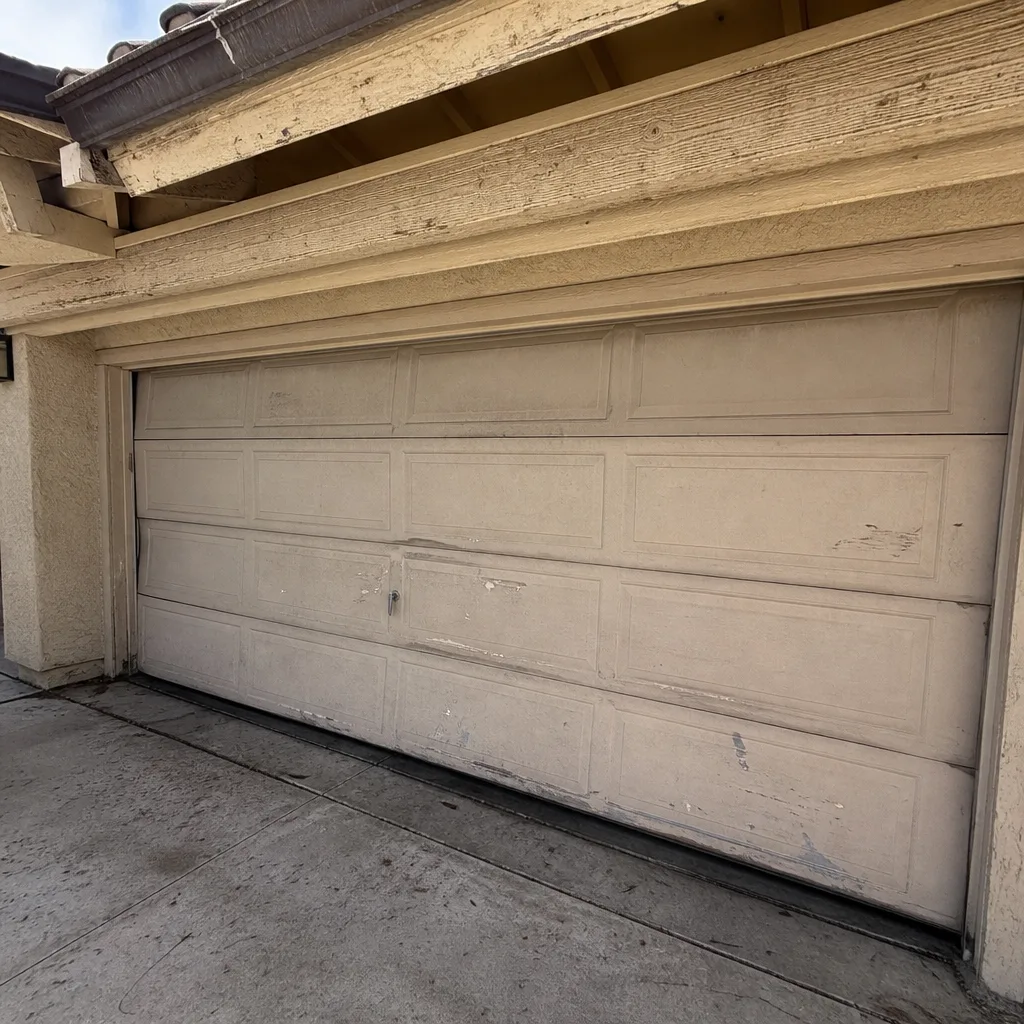 Before
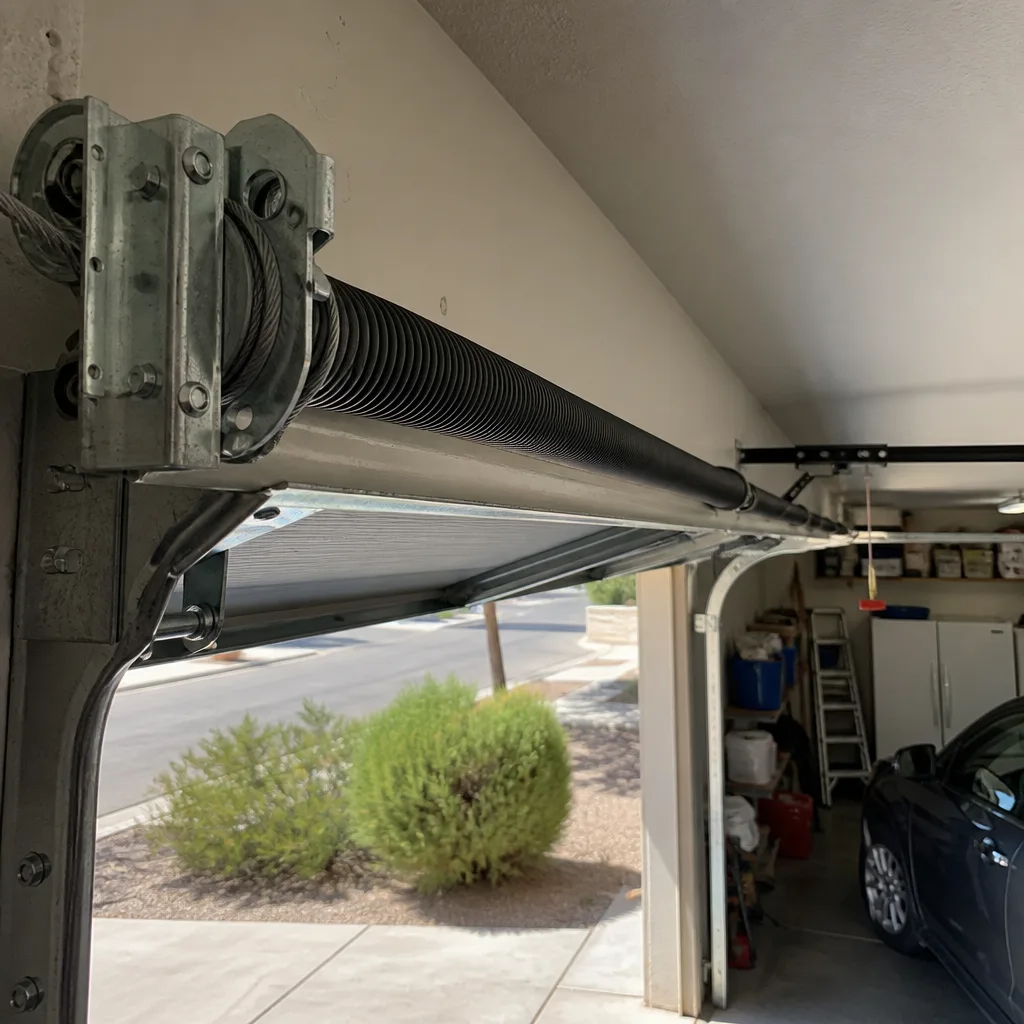 After
After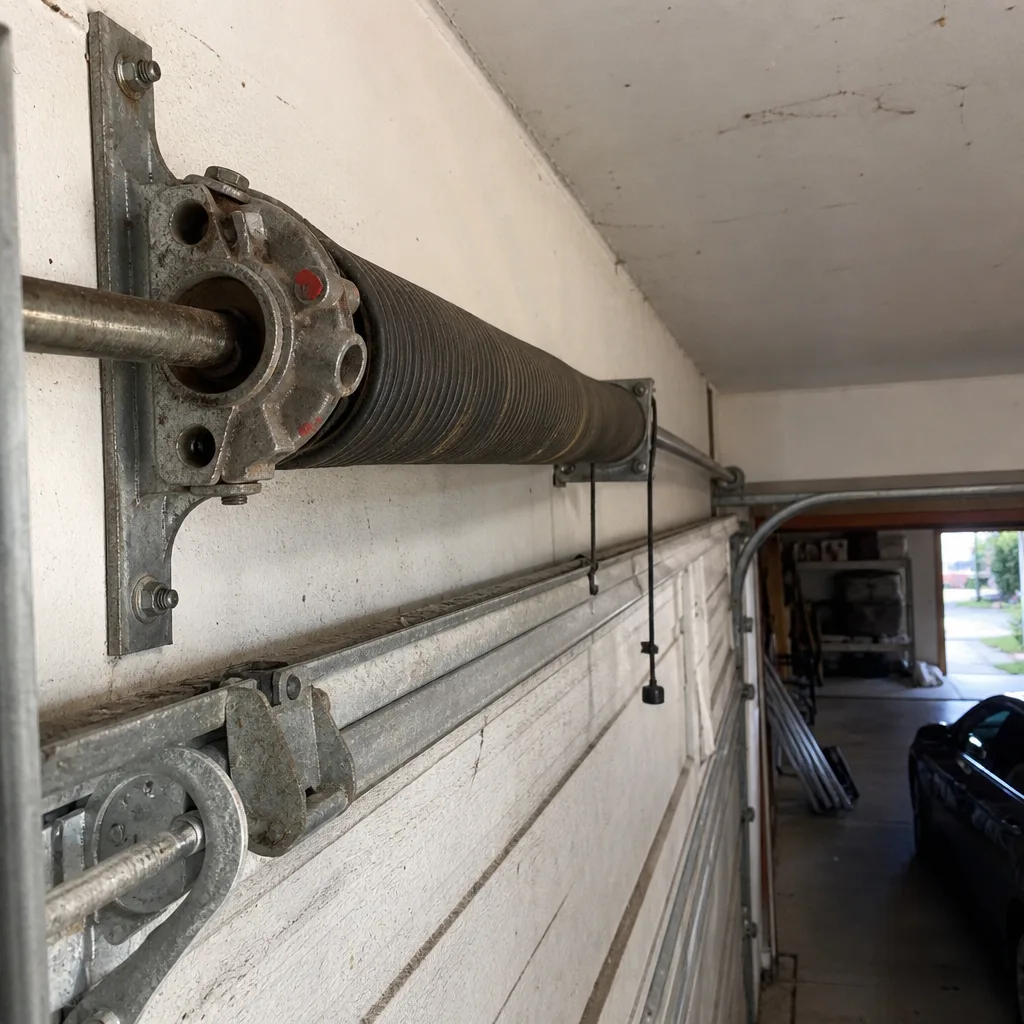 Before
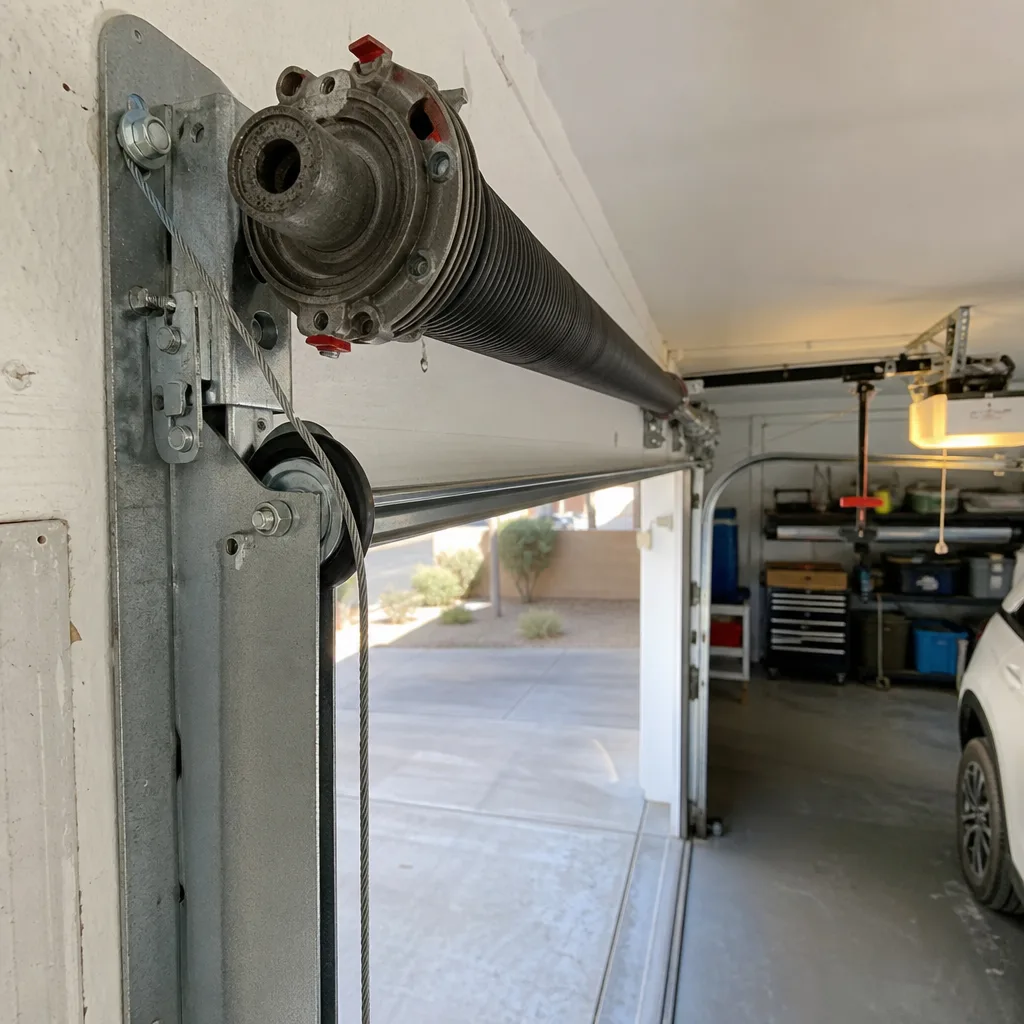 After
After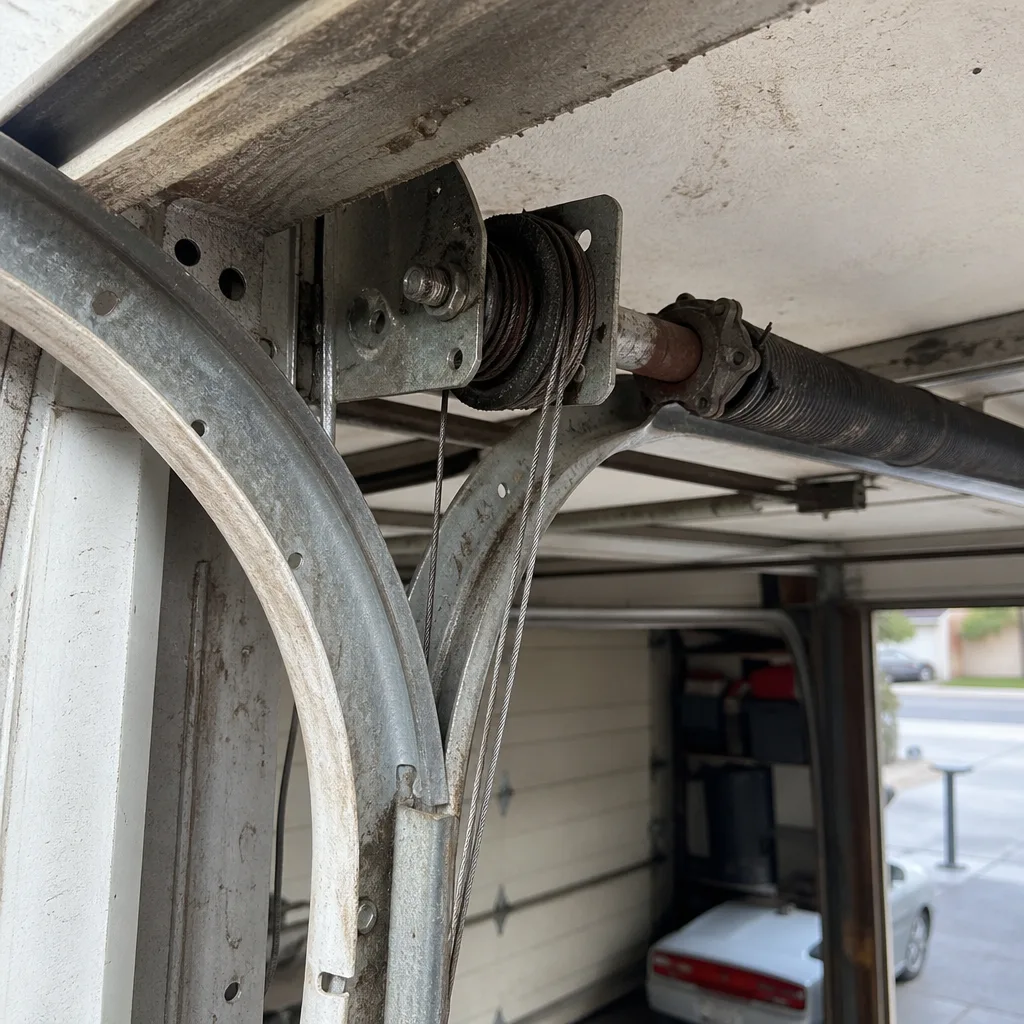 Before
 After
AfterDIY vs Professional Garage Door: The Scottsdale Homeowner’s Decision Guide
Most garage door guides draw the DIY line at “leave the springs to the professionals” and then stop, leaving Scottsdale homeowners to guess about everything else. That vagueness is the problem. A torsion spring stores roughly 100 foot-pounds of torque when wound, and a failure during DIY winding has caused documented fatalities. That is not a scare tactic; it is the reason professional spring work carries a separately rated liability classification in the trades. The line, though, is not uniform across the door. This guide draws it at the component level: what is genuinely safe for a careful adult with basic tools, what requires specialized equipment and training, and how that math changes when you are doing the work in Scottsdale in July. You will leave knowing exactly which tasks you can do this weekend, which ones should trigger a phone call, and how to document whatever you complete so it never creates ambiguity later.
Quick Answer
Most homeowners in Scottsdale can safely handle garage door lubrication, sensor alignment, limit switch adjustment, and bottom seal replacement with basic tools and about an hour. Torsion spring work, cable drum replacement, and header bracket installation should be left to a professional, not because the tasks are complicated, but because the stored energy in a wound spring and the tension in a lifting cable can cause serious injury or death when released incorrectly. In Scottsdale specifically, the heat turns even simple DIY tasks into practical failures between June and September, and unpermitted structural changes-something covered in our Garage Door Permits, Codes & Inspections in AZ: What You Need to Know-can complicate a future homeowner’s insurance claim.
Table of Contents
- Component-by-Component DIY Eligibility for Garage Doors
- Insurance and Liability: What Arizona Homeowners Need to Know
- Tool Cost Reality Check: What Safe Spring Work Actually Requires
- Scottsdale-Specific Timing: Why July Changes the DIY Equation
- How to Document DIY Garage Door Work
- Common Mistakes to Avoid
- When to Call a Professional
- Frequently Asked Questions
BeforeAfterComponent-by-Component DIY Eligibility for Garage Doors
The garage door is not one machine; it is a system of components, each with its own risk profile. Some are safe for a homeowner with a socket set and a step ladder. Others are not. The table below breaks down the most common tasks we see in Scottsdale and where each falls. “Safe for DIY” does not mean zero risk. It means the failure mode is a bent bracket or a misaligned sensor, not a spring unloading through your wrist.
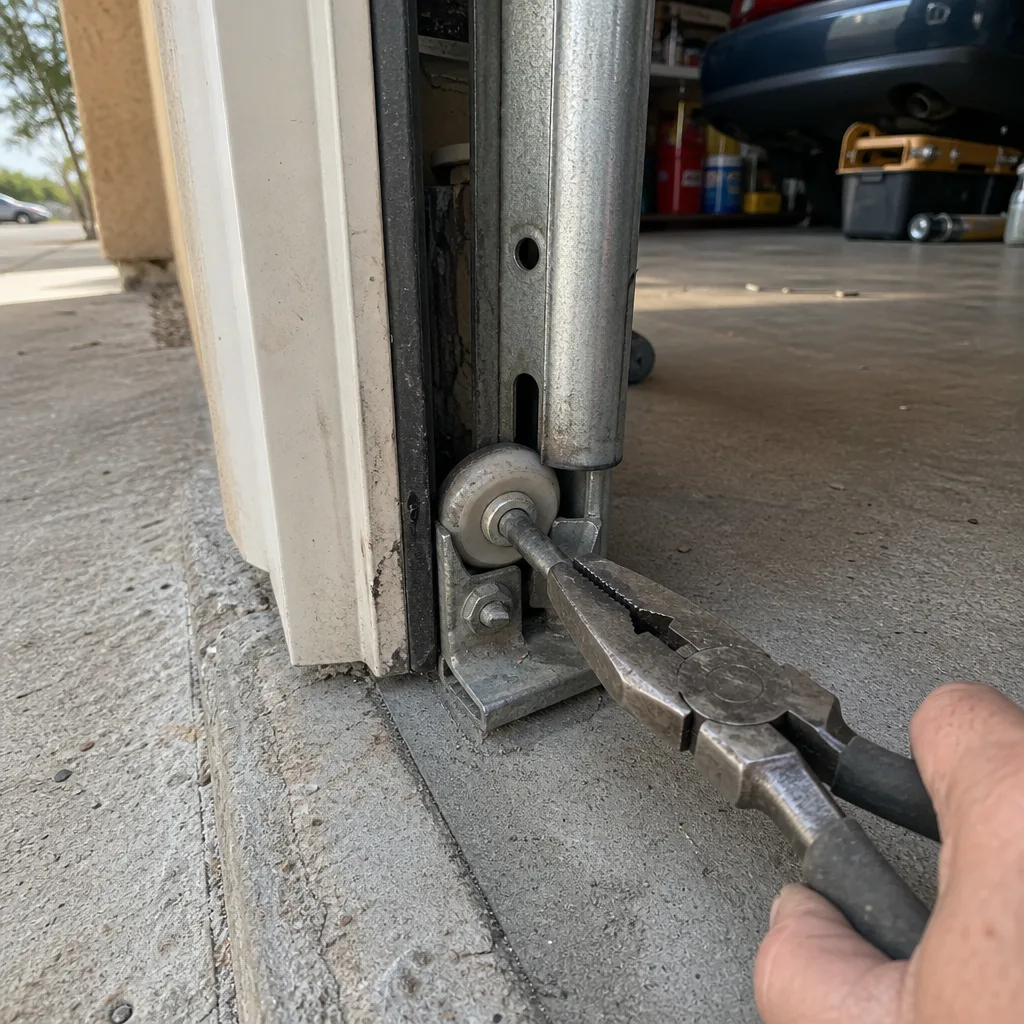
- Lubrication of rollers, hinges, and springs: Safe for DIY. White lithium grease on the hinges and rollers, and a light oil on the torsion spring coil. We recommend doing this every six months in Scottsdale because the dust from the desert accelerates dry friction. The failure mode is noise and wear, not injury.
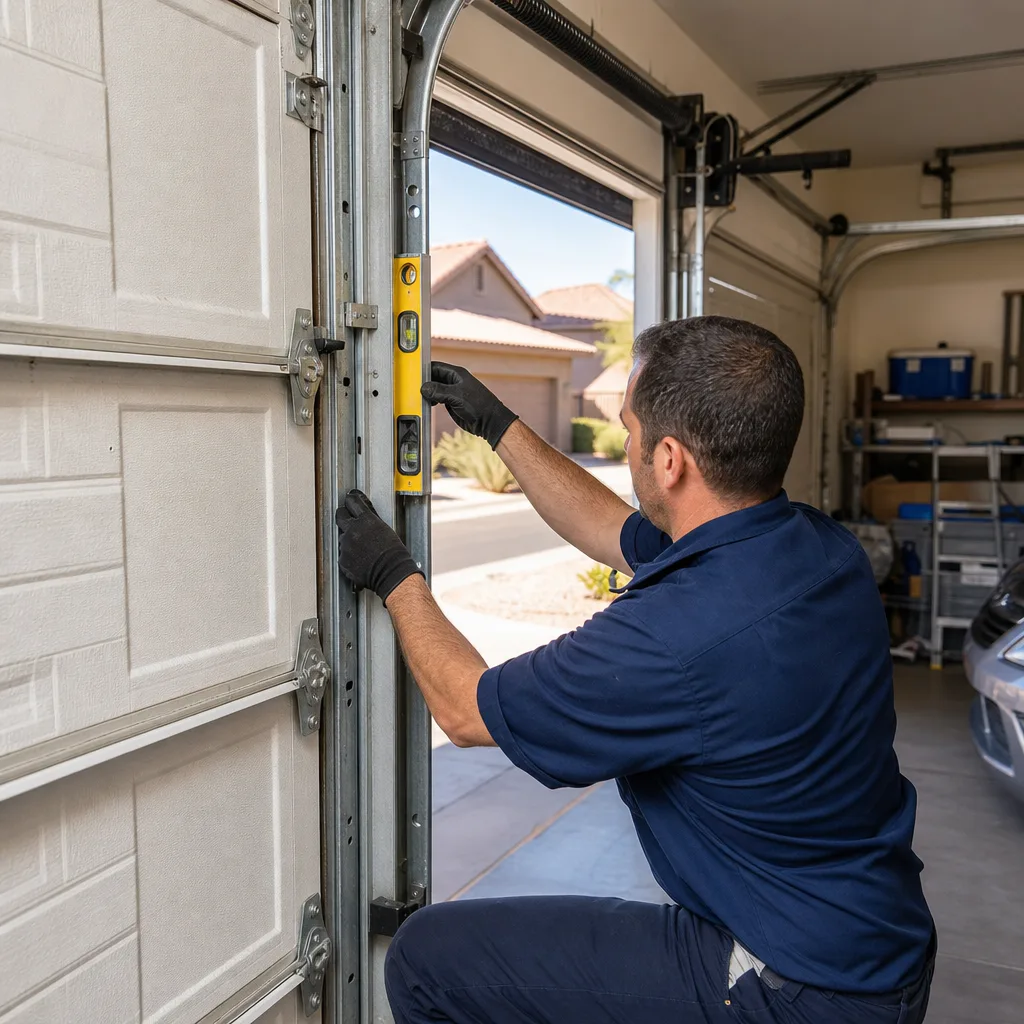
- Sensor alignment: Safe for DIY. Wipe the sensor lenses with a dry cloth, check that the small LED indicator on each sensor is lit and not blinking, and adjust the bracket until both lights hold steady. This fixes about one in five “door won’t close” calls without a service visit.
- Limit switch adjustment: Moderately safe. The limit switch tells the motor where to stop. A quarter-turn on the adjustment screw can fix a door that reverses mid-travel or does not close flush. You can do this, but mark the original position with a pencil first so you can undo it if the adjustment makes things worse.
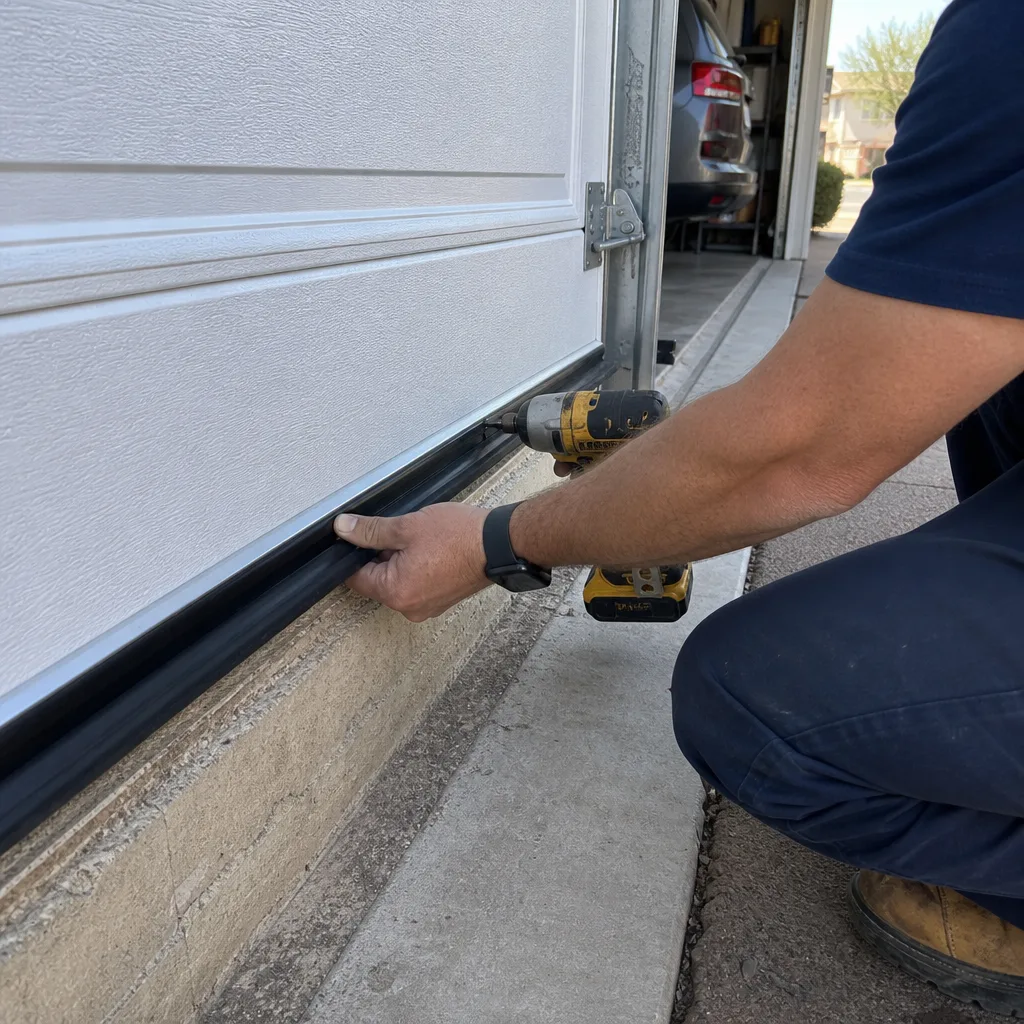
- Bottom seal replacement: Safe for DIY. Slide the old rubber seal out of the retainer channel, cut the new one to length, and slide it back in. This is the task we most often see homeowners complete correctly. The operational difficulty is not the seal; it is the Scottsdale pavement temperature, which we cover below.
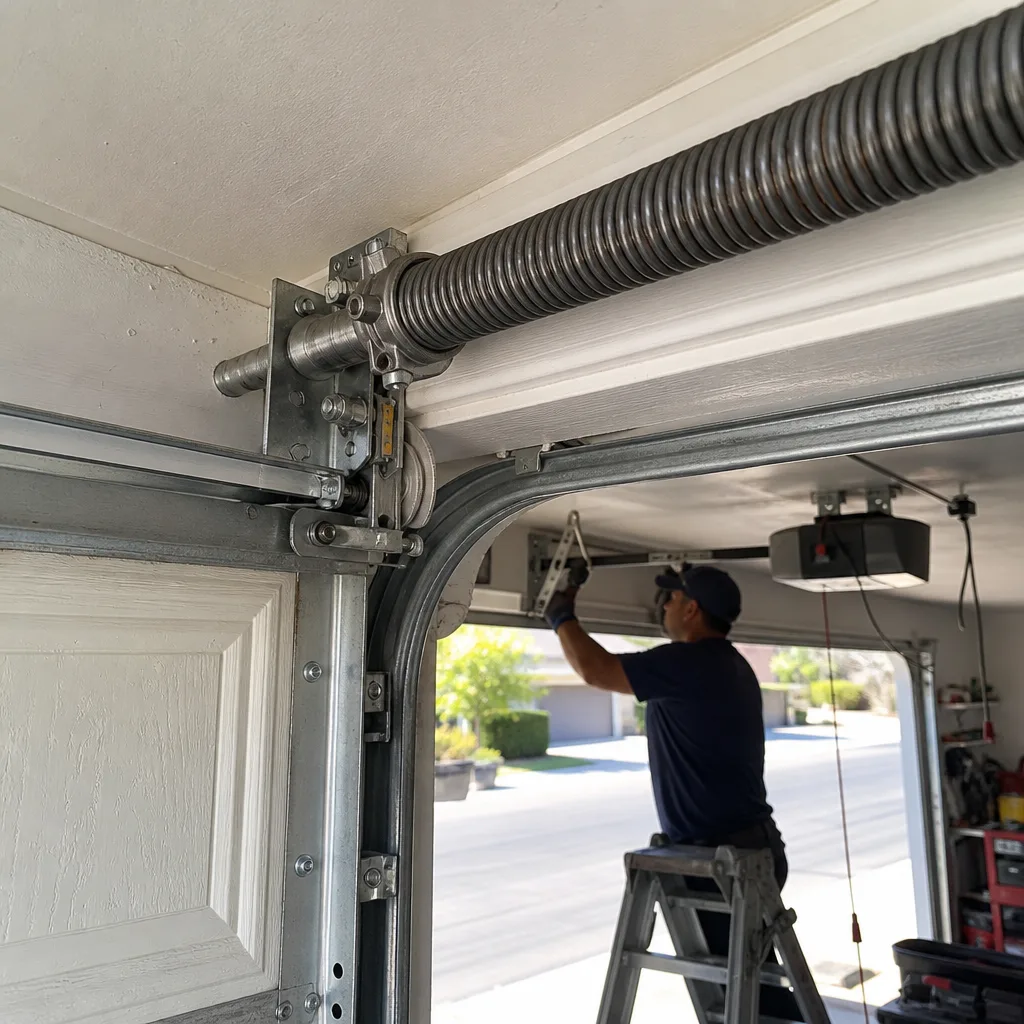
- Torsion spring winding and replacement: Professional only. The spring is wound under tension. The winding bars are inserted into the cone, and a slip means the bar becomes a projectile. No amount of YouTube research changes the stored-energy math. This is the line in the sand.
- Cable drum replacement: Professional only. The cable runs from the drum at the top of the shaft down to the bottom bracket. When a cable frays or the drum cracks, the door still has significant weight on the remaining cable. Removing the wrong bolt first drops the panel.
- Header bracket installation: Professional only. The header bracket mounts the torsion tube to the wall above the door opening. It carries the entire weight of the door plus the spring torque. A bracket anchored incorrectly to stucco or a hollow header can tear free under load.
The line, in plain terms: anything that involves stored mechanical energy is professional work. Anything that involves alignment, lubrication, or wear parts is fair game. A homeowner in north Scottsdale who lubricates the rollers and realigns a sensor on a Saturday morning is doing what we would do on a service call, minus the invoice.
Insurance and Liability: What Arizona Homeowners Need to Know
The DIY-vs-professional question is not only about physical injury. It is about what happens after the injury or the damage. In Arizona, homeowner’s insurance policies generally cover sudden and accidental damage, but they also carry exclusions for work performed without a licensed contractor when a permit was required, and for intentional or negligent acts. A garage door spring that fails during a DIY replacement and sends a winding bar into a vehicle in the driveway is a claim your insurer may investigate. The question they will ask is whether a reasonable homeowner should have known the risk. The answer, in 2026, is yes, because the risk is documented.
The structural angle matters too. Scottsdale does not require a permit for a garage door spring replacement or a panel swap. But it does require permits for structural modifications. If you remove a header bracket, relocate a torsion tube, or cut into a wall to install a side-mount opener, you have crossed from maintenance into modification. If that modification later contributes to a door failure or a property damage claim, the insurer can deny coverage on the basis that the work was unpermitted and altered the load path of the door.
There is also a quieter liability: the homeowner who does their own spring work and then sells the house. Arizona property disclosure statements require sellers to disclose known defects. A garage door that operates poorly, or a spring that shows signs of incorrect winding, is a defect a home inspector will flag. The buyer may then ask for a repair credit. What you saved on the DIY labor is now a line item in the closing negotiation. We have been called to inspect doors in McCormick Ranch and Gainey Ranch before sales, and the ones with prior DIY spring work stand out: uneven coil spacing, a door that is heavy on one side, or an opener motor that burns out early because the door balance was never correct.
For our part, Garage Door Repair in Scottsdale includes a documented photo record of every visit. We photograph the failed component before quoting a replacement, and we show you the completed work before we leave. That is Clause 4 of The Haven Standard, and it exists because we built the company in 2015 around a founding rule: the customer sees the failed part before anyone quotes a replacement. The paper trail is not just for our records; it is for your home file, your home inspector, and your insurer if the question ever comes up.
Tool Cost Reality Check: What Safe Spring Work Actually Requires
Most DIY spring-tutorial content skips the tool list. That is not an accident. The safe way to wind a torsion spring requires more than a pair of screwdrivers from the kitchen drawer. Here is the reality check, priced in 2026 dollars at Scottsdale hardware retailers and industrial suppliers:
- Winding bars: $25 to $50 for a set of two. These are solid steel rods, not rebar, not the handle of a socket wrench. Using anything else is how you get a facial fracture.
- Replacement torsion spring (matched to your door): $150 to $400 for a residential spring from a spring manufacturer, not an online marketplace. Springs are rated by wire diameter, inside diameter, length, and wind direction. Getting any one of those wrong changes the lift capacity of the door.
- Cable puller or come-along: $40 to $80. Needed to hold tension on the cables while you swap the spring, if the door has extension springs.
- Torque specs and a door weight measurement: You need a scale that reads the door’s weight, and you need to match the spring’s IPPT (inch-pounds per turn) to the weight and the drum radius. The math is not hard, but the measurement must be right. A door that is 30 pounds heavier than you calculated will not balance.
- Total DIY cost: $300 to $600, assuming you do not injure yourself and do not damage the door. And the first time you do it, budget most of a day. The first professional service call we run on a spring replacement takes about an hour.
A professional torsion spring replacement in Scottsdale runs roughly $450 to $750, including the spring, the labor, and a re-balance of the door. The gap between DIY and professional cost, in other words, is about $150 to $300. That is the amount you are saving in exchange for the stored-energy risk, the time commitment, and the reality that a miswound spring will fail early and put you back at the start. For most homeowners, the math does not close. The trade is not a question of skill; it is a question of whether saving $200 is worth a trip to the emergency room with a wrist injury. We would rather you call us for a written price, see the number on paper, and decide with the full picture. Servo Garage Doors Scottsdale home page has the phone number, and every quote is flat, written, and delivered before any work starts.
Scottsdale-Specific Timing: Why July Changes the DIY Equation
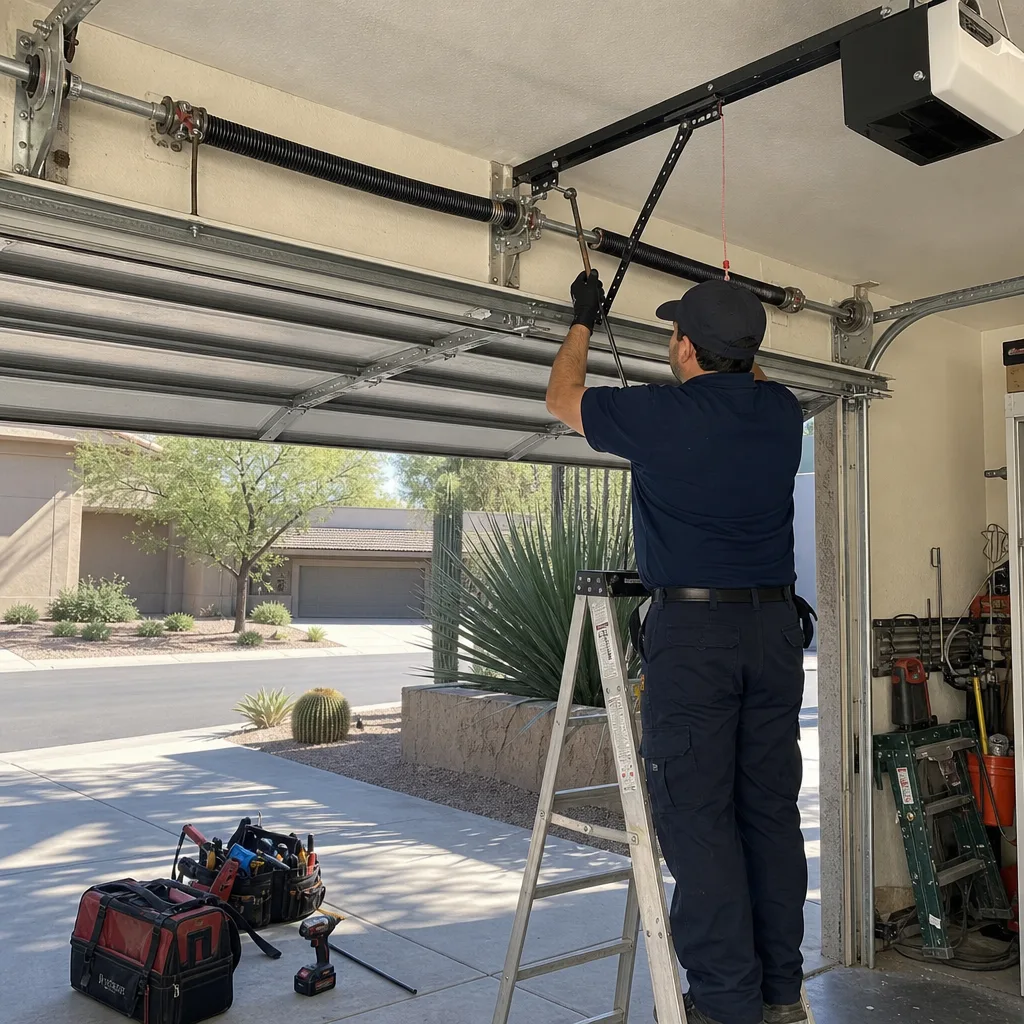
There is a reason we schedule our Scottsdale bottom-seal replacements for early morning in the summer. A bottom seal is a strip of rubber that slides into an aluminum retainer channel at the bottom edge of the door. Replacing it means kneeling or sitting on the driveway, working at ground level, while the door is open or propped. In July, the pavement temperature in Scottsdale reaches 150 to 160 degrees Fahrenheit by 11 a.m. That is not an inconvenience. It is a second-degree burn risk through clothing.
The heat affects the materials too. The old rubber seal, after a few Scottsdale summers, becomes brittle. It will not pull out cleanly; it will tear, and you will spend half an hour picking fragments out of the retainer with a flathead screwdriver while kneeling on asphalt that is cooking your knees. The replacement seal, if it has been sitting in a garage that is not air-conditioned, may have already started to soften. Installing a softened seal into a hot channel makes it more likely to kink.
The practical fix is the timing, not the task. Do bottom seal and lubrication work in Scottsdale between October and April, and do it early in the morning. From May through September, your working window is roughly sunrise to 9 a.m. If you cannot start by 9 a.m., do not start. Schedule it for a fall weekend. Or call us and let a technician with knee pads and a shade canopy do it in 20 minutes. The task stays within DIY scope. The environment is what changes the math.
The same logic applies to anything that requires you to work with metal parts that have been baking in a west-facing garage. A door track that has been in direct afternoon sun all day will be hot enough to burn skin on contact. Gloves help, but only up to a point. Scottsdale is not a place where you fight the environment to save a service call.
How to Document DIY Garage Door Work
If you do complete a DIY task on your garage door, document it the way a service technician would. This is not busywork. It is the difference between a future repair quote that takes ten minutes and a future repair quote that starts with “we are not sure what the previous owner did here.” Here is the record we would want to see if you called us after doing your own work:
- Photograph the component before you touch it. Wide shot of the door, then a close shot of the specific part: roller, hinge, sensor, seal. The before photo is the reference for any future comparison.
- Photograph the component after the work. Same framing. This shows what changed. If the sensor was misaligned before and aligned after, the after photo is the record of the fix.
- Note the date and the product used. “Lubricated hinges and rollers with white lithium grease, 3/14/2026.” If you replace a bottom seal, note the brand and the length. If you adjust a limit switch, note the original setting and the final setting.
- Keep the documentation in the home file, not on your phone. A future home inspector, buyer, or technician will not be able to scroll your camera roll. Print the photos or store them in a folder with the house records.
- If it involves a spring, cable, or bracket, do not do it yourself. The documentation step for that work is the technician’s photo record. That is our job.
We include a documented photo record on every visit, not because anyone asked us to, but because our founder, Marcus Deller, started the company in 2015 with a rule: show the customer the failed part before quoting a replacement. That rule became Clause 4 of The Haven Standard. The same principle applies to the work you do yourself. A clear photo record means no ambiguity, no he-said-she-said, and no second-guessing from a future technician or home inspector. For Garage Door Installation in Scottsdale, we provide the same record for new doors and openers.
Common Mistakes to Avoid
- Using the wrong lubricant on a torsion spring. WD-40 is not a garage door lubricant. It is a solvent and a water displacer. On a torsion spring, it will strip whatever light oil is there and accelerate rust on the coil. Use a purpose-made garage door lubricant or a light machine oil.
- Adjusting the limit switch without marking the original position. A quarter-turn too far on a LiftMaster or Chamberlain opener will make the door slam into the ground or not close at all. Mark the screw with a pencil or a piece of tape before you turn it.
- Attempting spring work with improvised tools. Every emergency room visit we have heard about from a DIY garage door injury involved a substituted tool: a screwdriver as a winding bar, a piece of pipe as an extension, a pair of pliers as a cable clamp. The spring does not care. It will release the same amount of energy regardless of what is in your hand.
- Replacing a bottom seal while standing on hot Scottsdale pavement in July. The task is DIY-safe. The timing is not. A 150-degree driveway will burn you faster than you can finish pulling the old seal.
- Skipping the door balance test after working on any component. After lubricating, adjusting, or replacing anything, disconnect the opener and lift the door manually. It should lift smoothly and stay in place at half-height. If it falls, something is wrong, and the opener motor will be the next thing to fail.
- Ignoring a frayed cable because the door still opens. A cable with a visible fray is already past its service life. The remaining strands are under the full weight of the door. When it snaps, the door can drop suddenly. This is a call-you-today situation, not a watch-it situation.
- Buying a replacement spring from an online marketplace without verifying the specs. A “universal” torsion spring is often a generic spring with the wrong wire diameter for your door weight. It will be too strong or too weak. Too weak means the opener strains. Too strong means the door is hard to close and slams at the bottom.
When to Call a Professional
Call a professional when the task involves stored energy, structural fasteners, or a door that is no longer balanced. A snapped torsion spring, a frayed lift cable, a cracked cable drum, a loose header bracket, or a door that falls when you disconnect the opener: these are all professional calls. In Scottsdale, call when the temperature makes even a simple task unsafe, or when you are not certain what you are looking at. A good technician will tell you what is wrong in plain terms and give you a written price before any work starts. Servo Garage Doors Scottsdale offers free estimates in Scottsdale. Call (928) 363-3551 and a live person will answer, any hour, any day. We name the price on the page, in dollars, before we touch a bolt.
For opener-specific issues, such as a logic board failure or a trolley carriage that has stripped, see Garage Door Opener Repair & Installation in Scottsdale. If you have a written estimate from another company, bring it in. We will give you a free second opinion on the number and the scope. No coupon, no code, no catch.
Frequently Asked Questions
Physically, yes. Safely, no. A torsion spring stores enough energy to break bones or cause death if it releases while you are winding it. The safe tooling costs $75 to $130, the spring costs $150 to $400, and the risk is permanent. For most Scottsdale homeowners, a professional replacement at $450 to $750 with a written price and a photo record is the better decision. Call (928) 363-3551 for an exact quote. Estimates are free and the price is written before any work starts.
You can safely lubricate rollers, hinges, and springs every six months; clean and realign the safety sensors; adjust the limit switch by small increments with the original position marked; and replace the bottom rubber seal. These tasks use basic tools, have non-injurious failure modes, and take about an hour. Anything involving springs, cables, drums, or header brackets is professional work.
A torsion spring replacement in Scottsdale typically runs $450 to $750, including the spring, labor, and a door re-balance. For a deeper look at pricing factors, see our Garage Door Cost Breakdown: The Scottsdale Homeowner’s Reference for 2026. The specific number depends on the spring’s wire diameter, inside diameter, length, and wind direction, plus the door’s weight. You should receive a flat, written price before any work begins. If a company says “we will know when we see it,” get a second quote.
It can. Arizona insurers may deny a claim if a DIY repair caused the damage and the work was something a reasonable homeowner should have known was unsafe. Unpermitted structural modifications, such as relocating a header bracket or cutting into a wall for a side-mount opener, can also void coverage for related damage. Keep a photo record of any DIY work you complete, and leave structural or spring work to a licensed professional.
Yes. We answer calls live on a 24/7 basis, including holidays. When you call (928) 363-3551, you will speak to a person, not a recording. We will give you a named technician and an on-the-way text, not a four-hour callback window. Emergency spring work is our core call volume in Scottsdale, and we stock the common springs on the truck.
No. Our price is quoted in writing before any work starts, per Clause 1 of The Haven Standard. The customer sees the failed component, receives the written price and written scope, and approves it before a single bolt is turned. If the technician finds something additional, that is a new written line item, not a surprise at the end. Marcus Deller started Servo on this principle in 2015, and it has not changed.
The Bottom Line
The garage door is not one decision. It is a set of components, each with its own risk profile. What you can safely do yourself in Scottsdale is lubrication, sensor alignment, limit switch adjustment, and bottom seal replacement, and only when the temperature allows. What you should never do yourself is spring work, cable work, drum work, or header bracket work. The cost savings on professional spring replacement are about $150 to $300. The injury risk is not worth that delta. Document whatever DIY work you complete, photograph it, and keep the record in your home file. When the job calls for a professional, call Servo Garage Doors Scottsdale at (928) 363-3551. For more guides & resources, visit our blog. You will get a written price before any work starts, a photo record when it ends, and a live person on the phone every time.
Written by Marcus Deller, Owner at Servo Garage Doors Scottsdale, serving Scottsdale since 2015.