
Last updated September 20, 2026
Full 25-point door and opener safety check with every visit - springs, cables, rollers, tracks, and your LiftMaster or Chamberlain opener included
You get a price before we start. It does not change when the truck arrives.
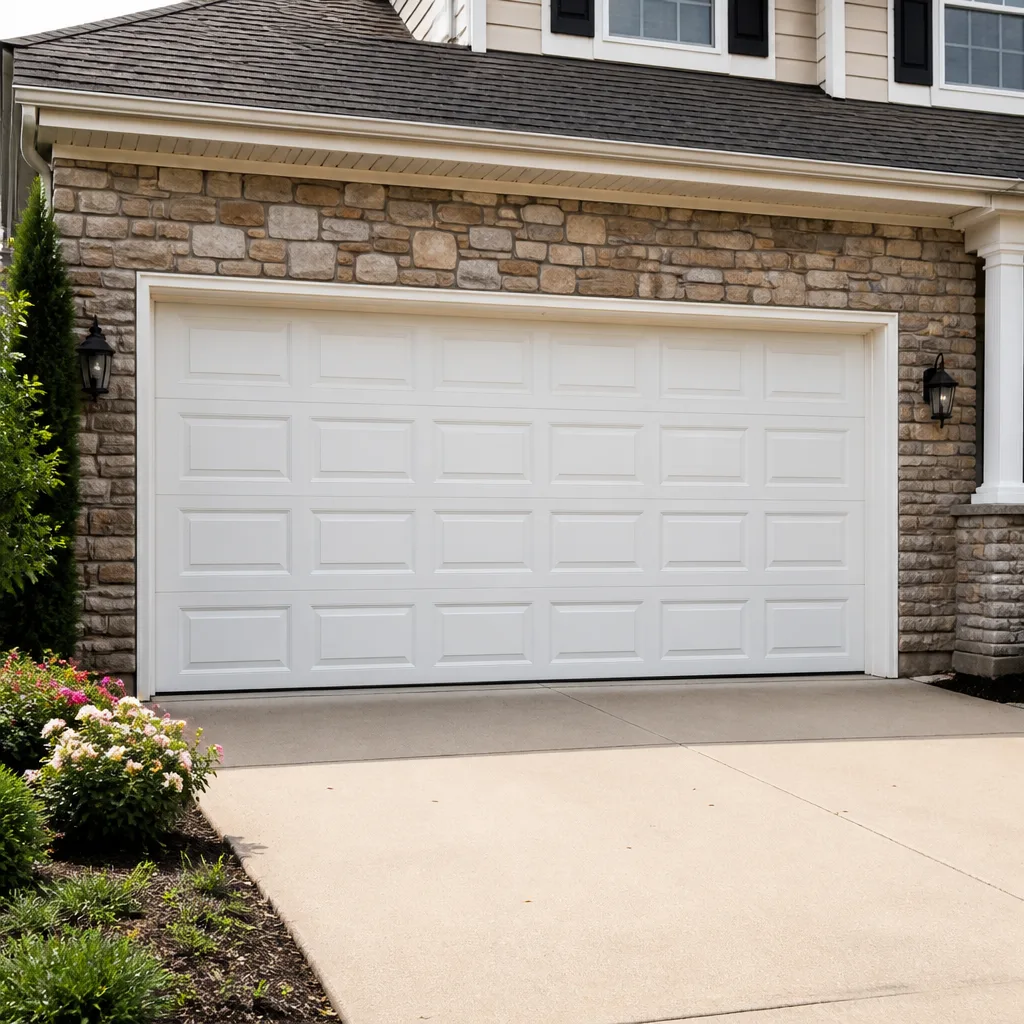
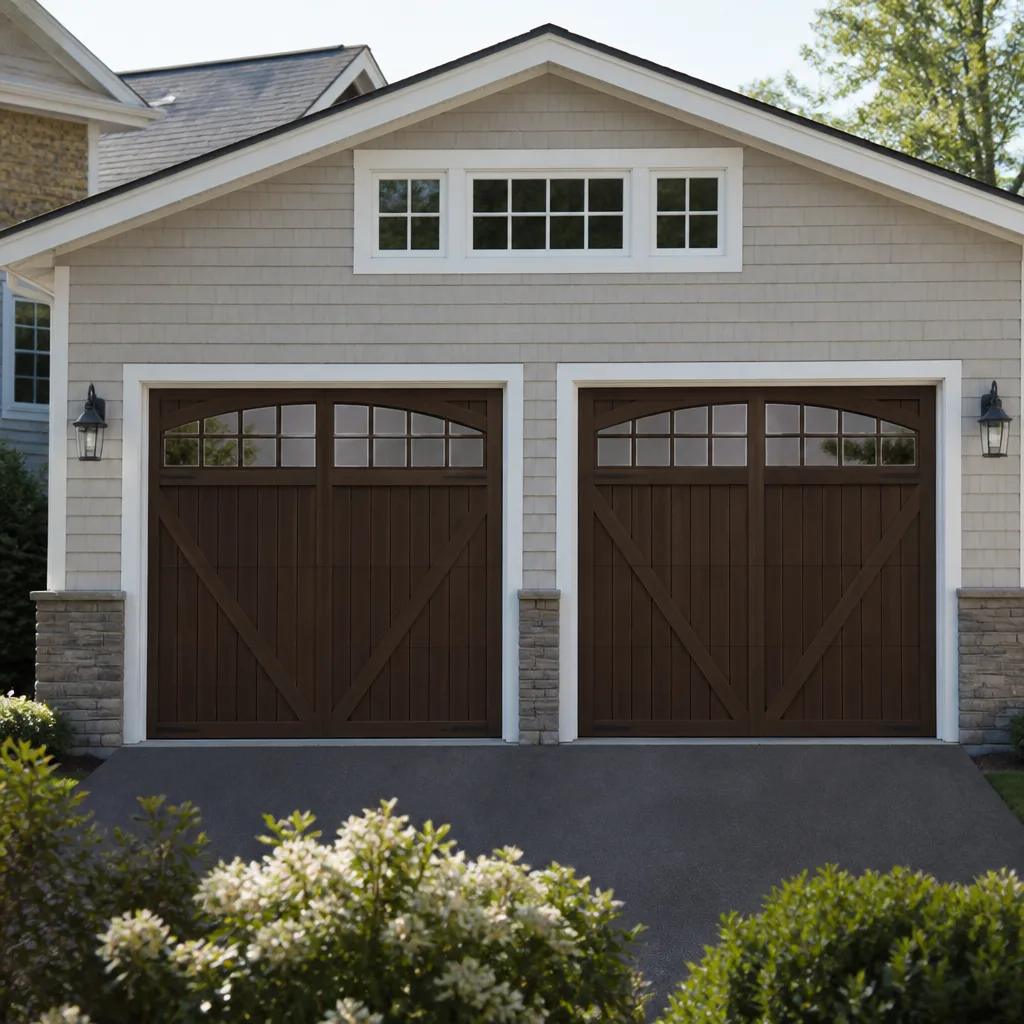
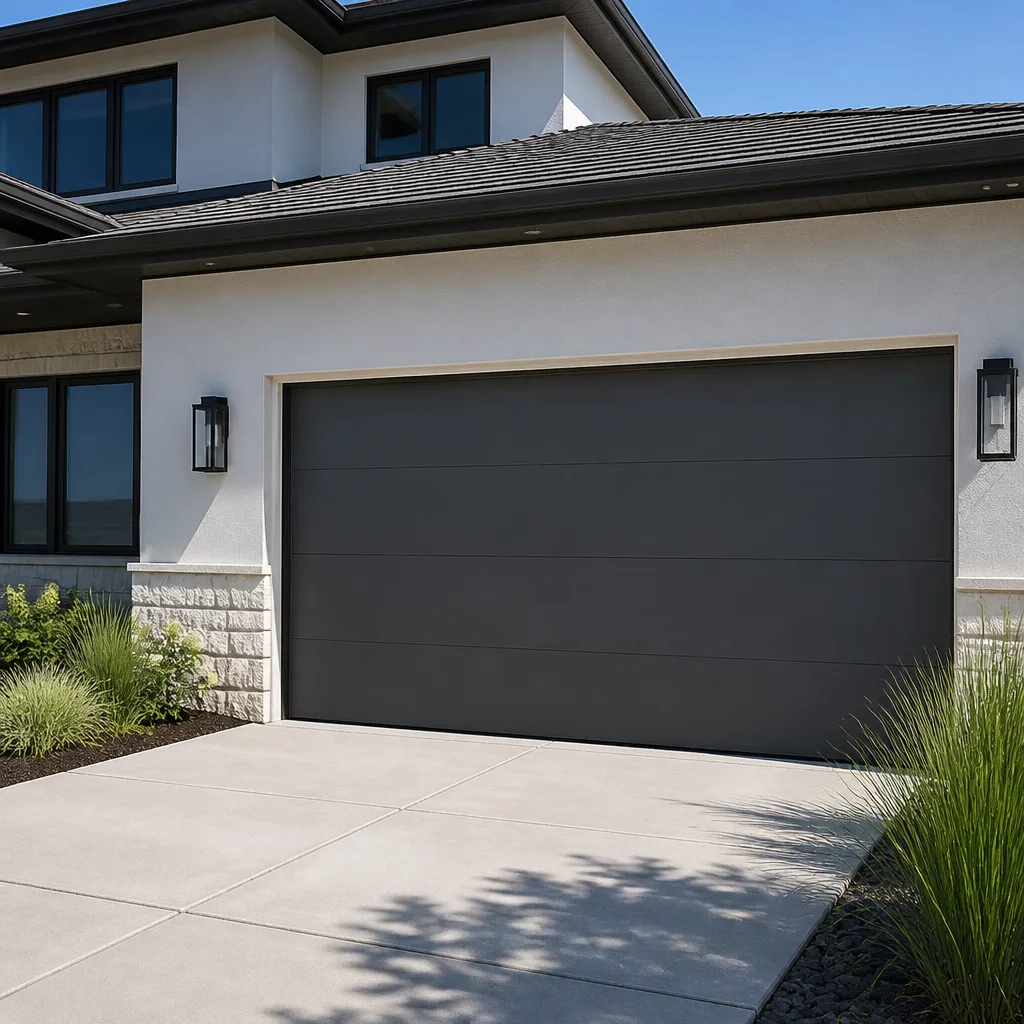
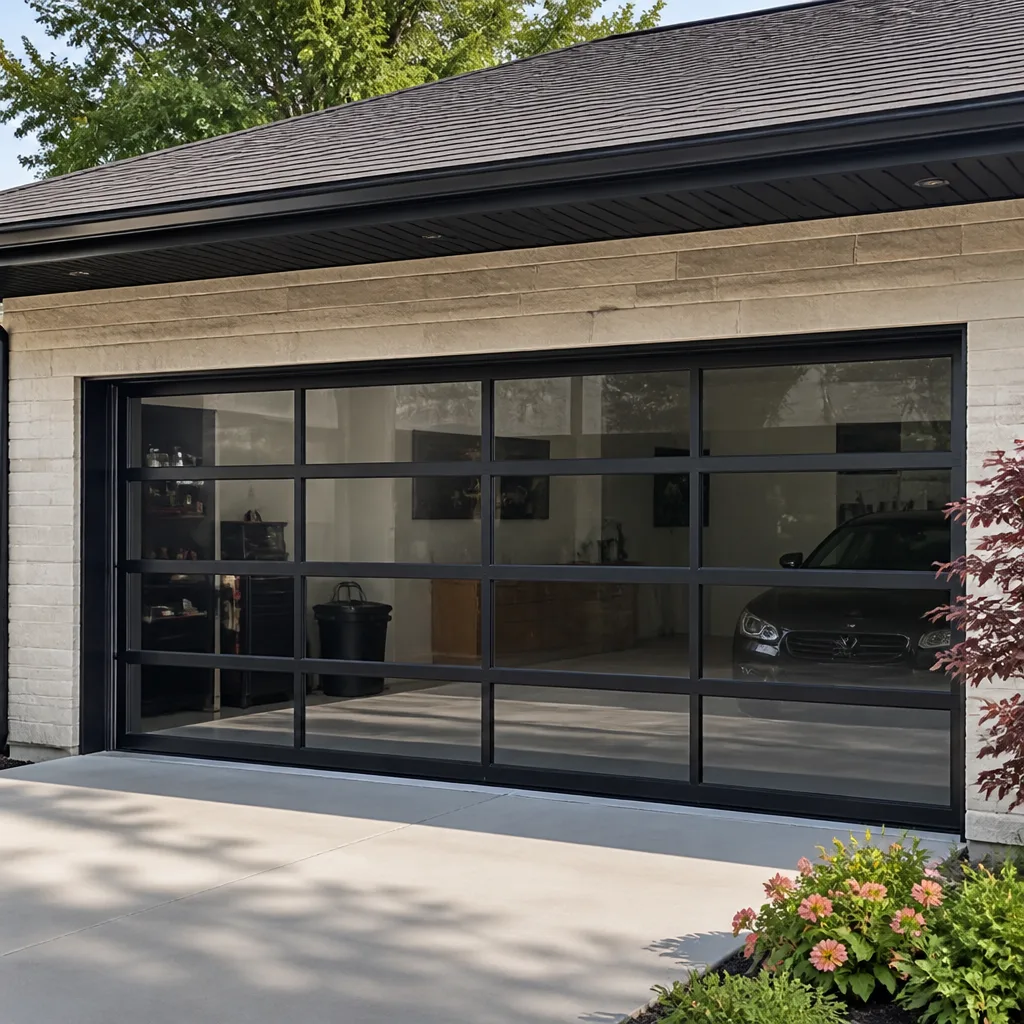
 Before
 After
After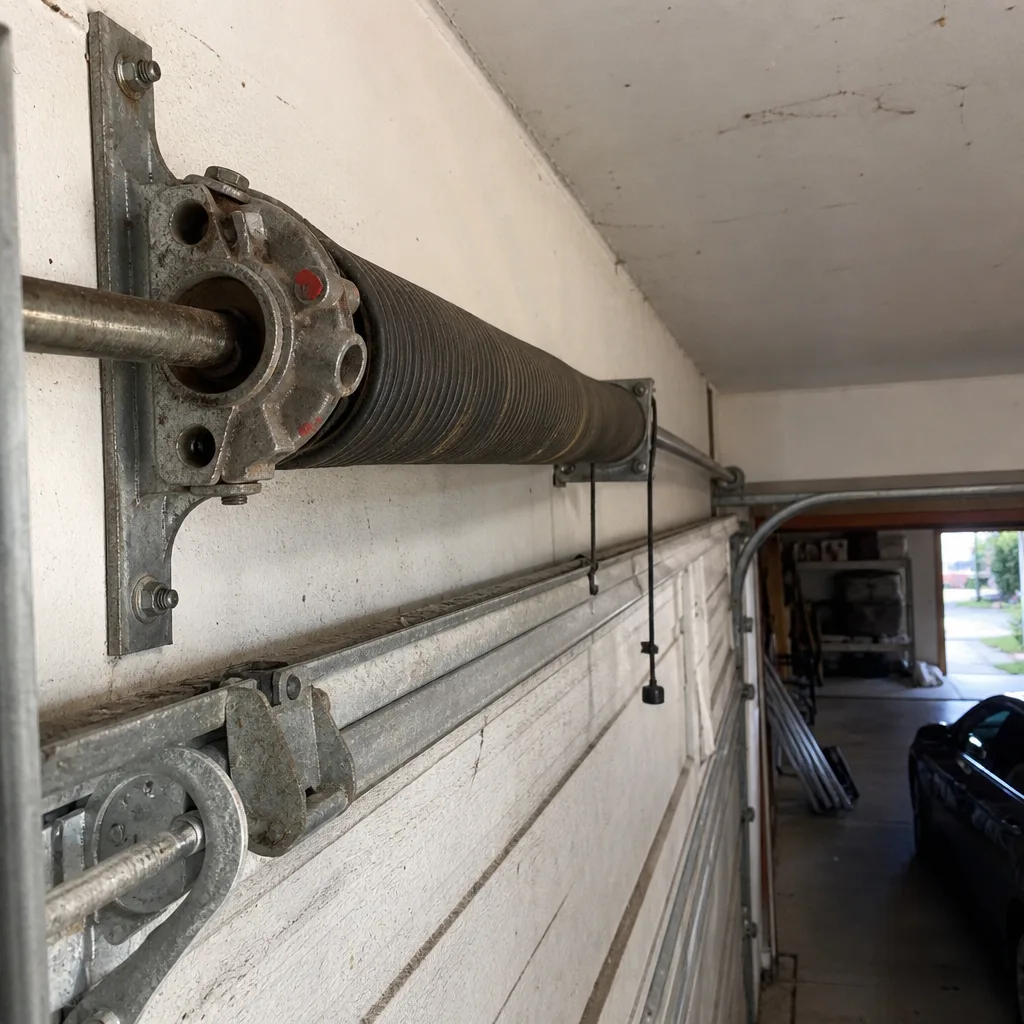 Before
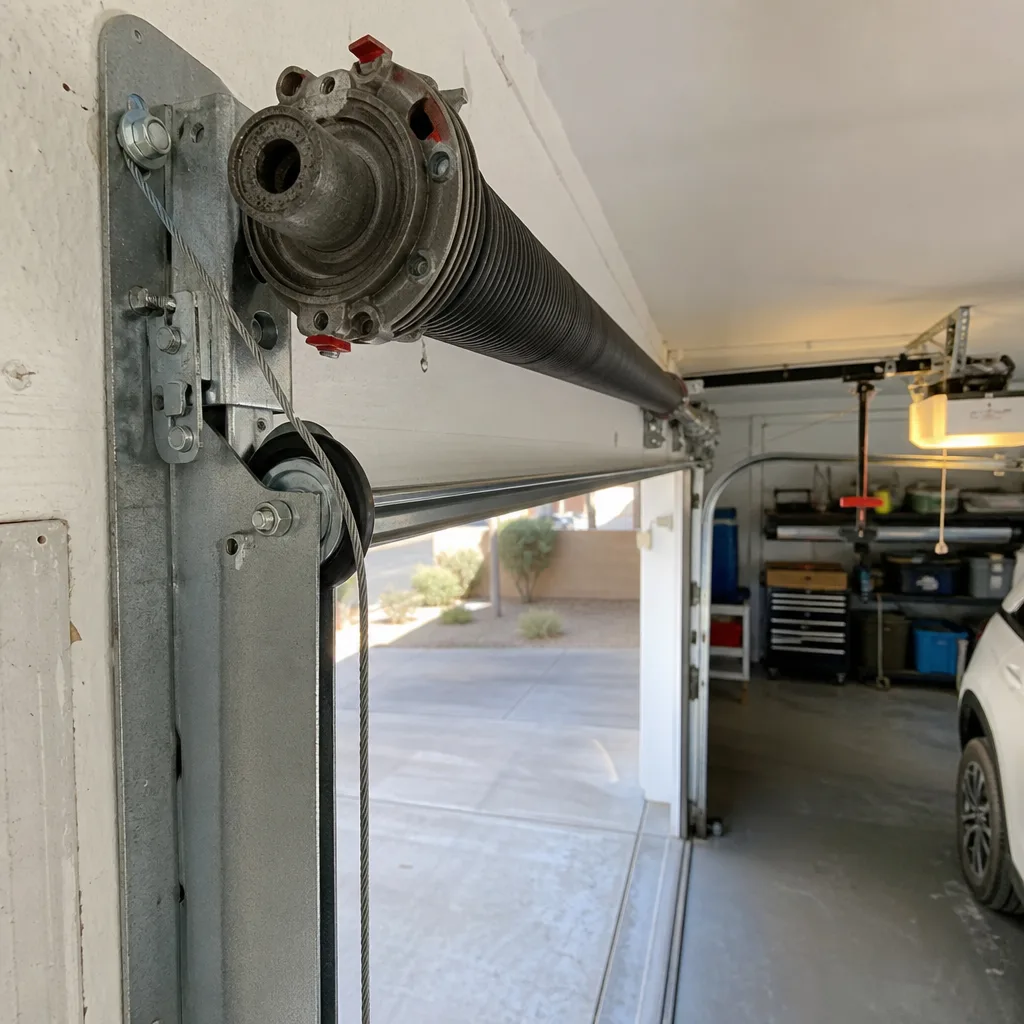 After
After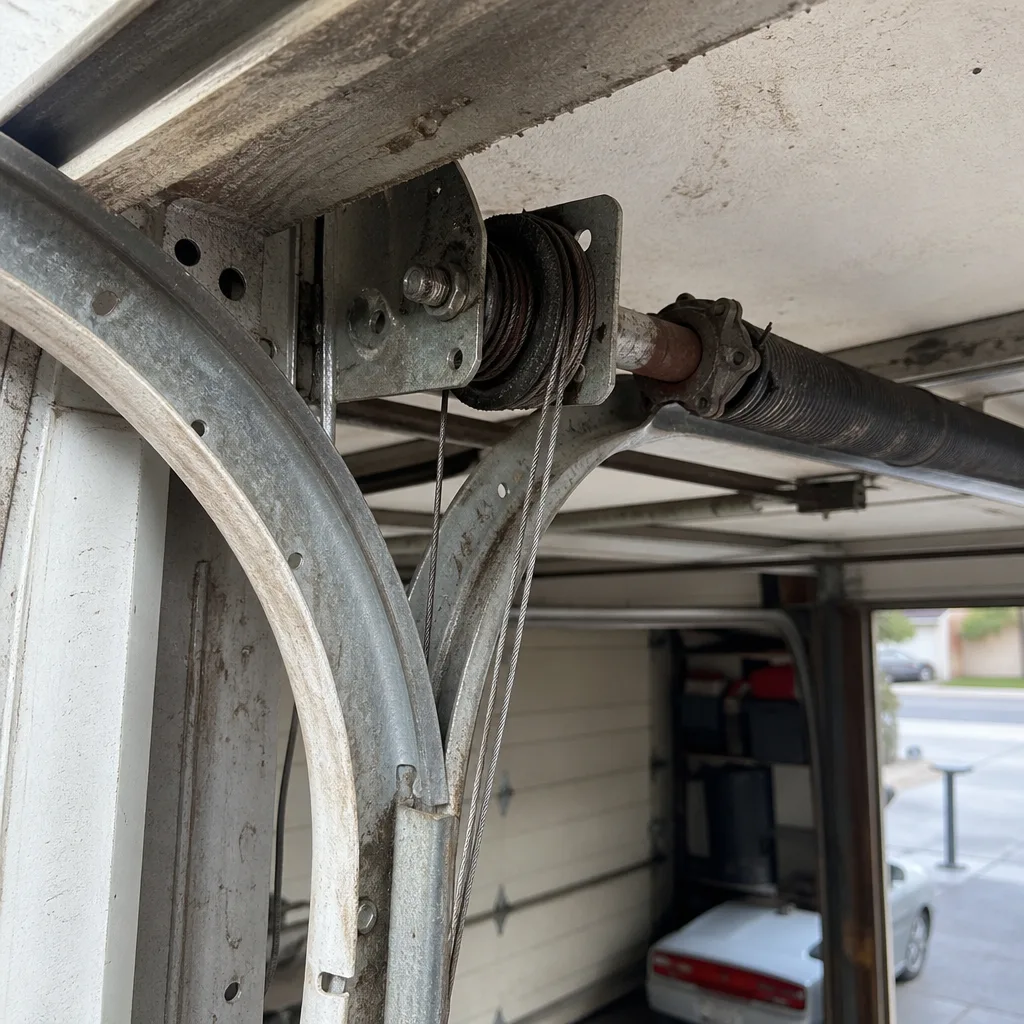 Before
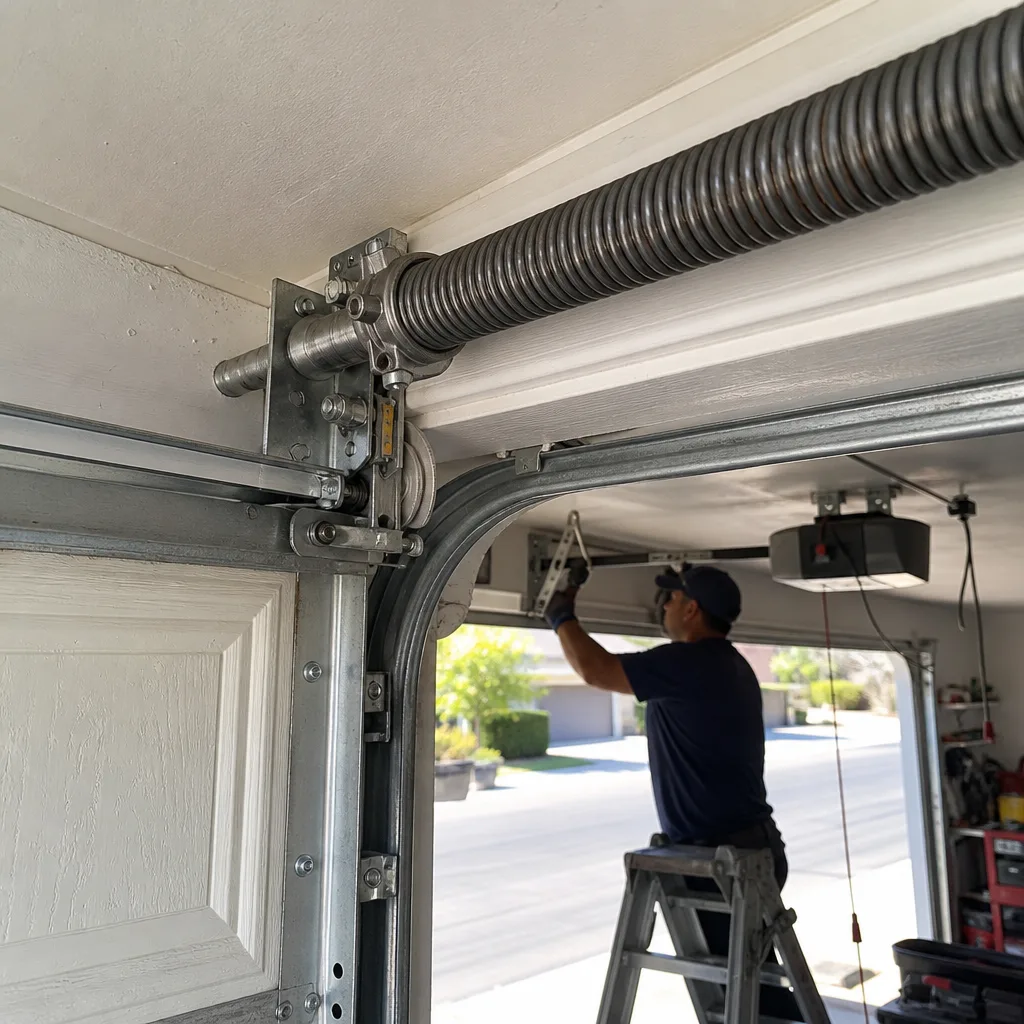 After
AfterGarage Door Warning Signs: A Scottsdale Homeowner’s Reference Guide
Most garage door “warning signs” articles read like a vague list of bad omens: loud noise, slow movement, a door that looks tired. What they don’t tell you is which component is actually failing, how long you have before the door stops working entirely, or whether the symptom you’re ignoring right now is a $90 fix or a $900 replacement. This guide is different. We’re going to name the part, explain the failure mechanism, give you a realistic timeline, and put a dollar range on it, because those are the details that matter when you own a home in Scottsdale and your garage door is the largest moving object in your house.
Quick Answer
The most important garage door warning signs in Scottsdale are: grinding during opener engagement (worn drive gear or binding roller), a door that hesitates or reverses on the way down (limit switch or safety sensor misalignment), squealing that changes pitch as the door travels (roller bearings failing), and rust streaks or bubbling paint on panels (water infiltration or UV delamination). Each of these has a different urgency level and cost. If your door makes grinding noise, stop using the opener and use the manual release cord until a technician can inspect it; continuing to run the opener can strip gears and add $150-$300 to the repair bill.
Table of Contents
- Sound-Based Diagnosis: Grinding, Squealing, and Thumping
- Movement-Based Signs: Uneven Travel, Hesitation, and Reversal
- Scottsdale-Specific Visual Signs: UV, Heat, and Rust Patterns
- The Safe-to-Use / Use-with-Caution / Stop-Using Framework
- What to Photograph Before a Technician Arrives
- Cost and Timeline: Fix It Now vs. Fix It After It Breaks
- Common Mistakes to Avoid
- When to Call a Professional
- Frequently Asked Questions
BeforeAfterSound-Based Diagnosis: Grinding, Squealing, and Thumping
A garage door that makes noise is not a personality trait. Each sound maps to a specific component and a specific failure timeline, and being able to distinguish them tells you whether you’re dealing with a nuisance or a safety event.
Grinding on opener engagement. If the noise happens the moment the opener motor starts turning, before the door begins to move, you’re almost certainly hearing a worn drive gear inside the opener. On LiftMaster and Chamberlain models with plastic drive gears (the standard design on most chain-drive openers), the gear teeth strip gradually over 7-10 years. The grinding is the sound of gear teeth no longer meshing cleanly. A second possibility is a binding roller, where the roller’s bearing has seized and the roller is dragging rather than rolling inside the track. We see both in Scottsdale, but the drive gear is more common on openers older than seven years.
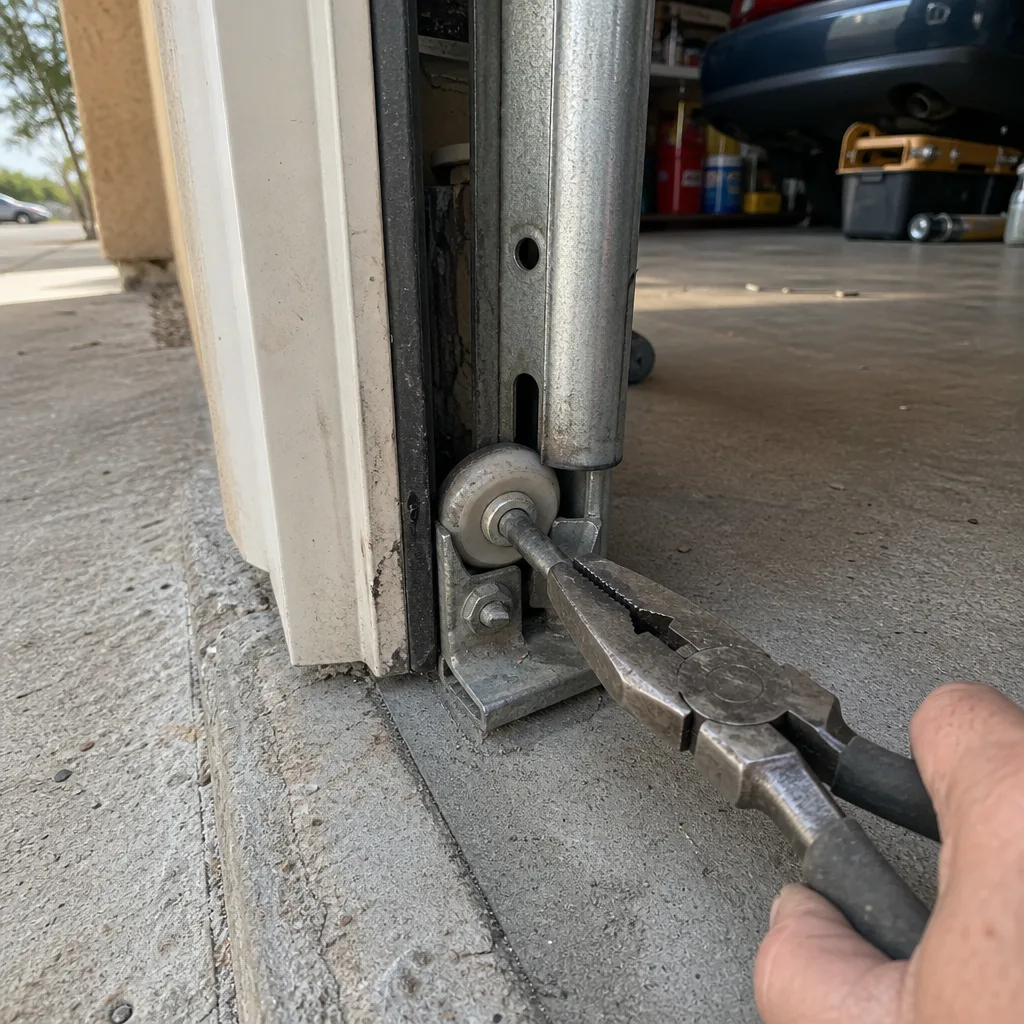
Squealing that changes pitch as the door travels. This is classic roller bearing failure. The rollers, those small wheels that ride inside the vertical and horizontal tracks, contain sealed bearings. When the bearing dries out or the roller shatters (common on nylon rollers after a decade of Scottsdale heat), the metal-on-metal contact produces a high-pitched squeal that rises and falls with door speed. A broken roller on one side also forces the other rollers to carry uneven weight, which accelerates wear across the entire set.
Thumping or banging during travel. A rhythmic thump that repeats at regular intervals as the door moves usually means one of three things: a bent track section, a loose hinge, or a door panel that has warped slightly and no longer rides centered between the tracks. The thump is the sound of metal making contact where it shouldn’t. If the thump is followed by a visible jerk in the door’s movement, check the track bolts first, they’re the fastest fix and the easiest to confirm with a socket wrench on the bracket bolts where the track mounts to the wall.
None of these sounds improve on their own. The drive gear will strip completely. The roller bearing will seize. The thump will become a bind, and a bound door under tension from a torsion spring can throw a cable, which drops the full weight of the door onto whatever is beneath it.
Movement-Based Signs: Uneven Travel, Hesitation, and Reversal
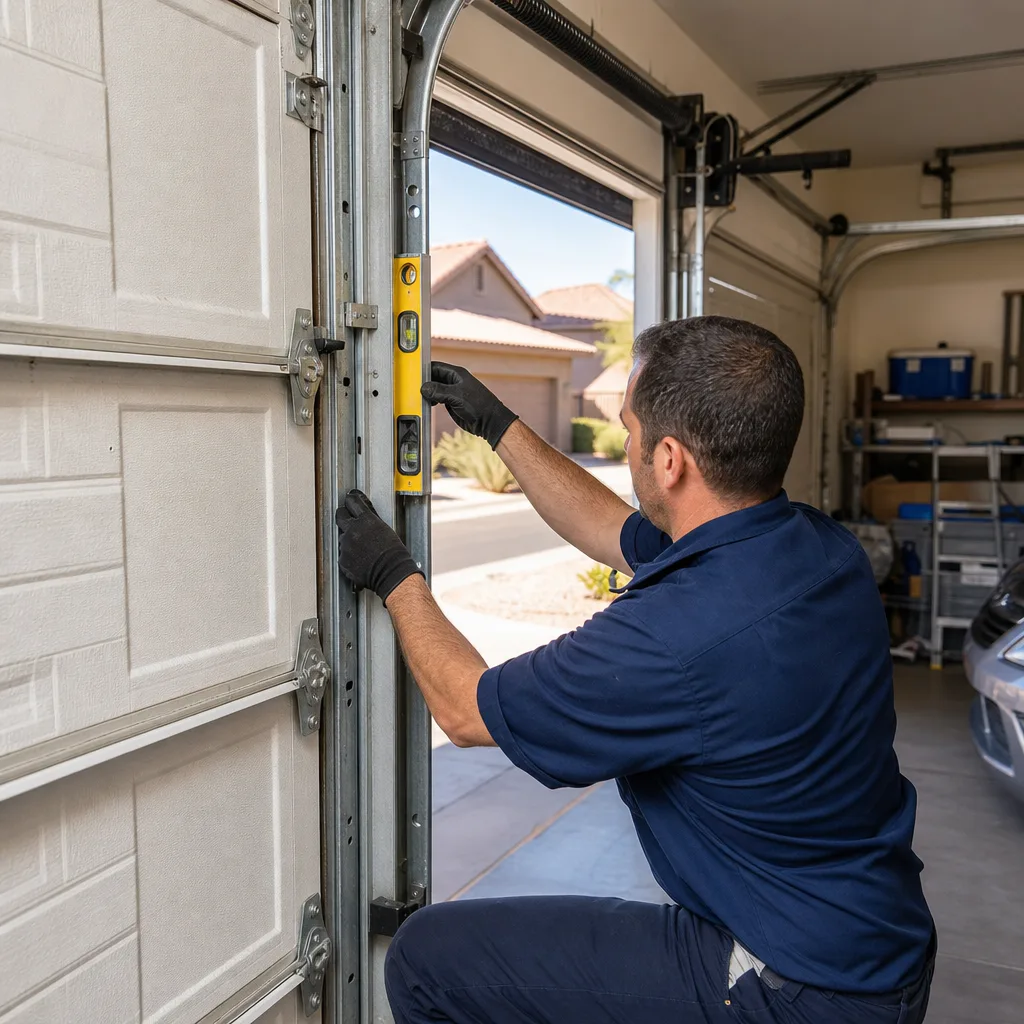
Sound is the warning most people notice first. Movement abnormalities are the ones that indicate structural problems, and they’re easier to observe from across the driveway than from inside the garage.
Uneven travel (one side higher than the other). When a door sits crooked in the opening, or rises faster on one side, the usual causes are a broken or stretched extension spring, a worn torsion spring that has lost tension on one side, or a track that has come out of alignment. In Scottsdale’s dry climate, we also see this on homes where one side of the door faces direct afternoon sun: the sun-side panel expands subtly during the day and the door runs slightly off-plane until it cools. That’s a visual observation, not a mechanical failure, but it’s worth knowing before you assume the worst.
Hesitation on reversal. When you press the button to close and the door starts, stops, and reverses back up, the safety sensor system is doing exactly what it’s designed to do, but it’s reading something that isn’t there. The most common culprit is misalignment: one of the two photo-eye sensors near the floor on either side of the door has drifted out of line. Dust, spider webs, and direct sunlight hitting the lens (a frequent Scottsdale issue on south-facing garages) can also trigger false readings. The wiring harness back to the logic board is a less common but real failure point, especially on openers installed during the 2015-2018 housing boom.
A door that won’t fully seat. If the door stops an inch or two above the concrete slab, leaving a visible gap, check the limit switch settings inside the opener before you assume the spring is failing. Limit switches tell the opener how far the door should travel before it considers the cycle complete. They drift over time, and when they drift, the door stops short or presses too hard into the slab. However, if the gap is new and the limit switch is unchanged, a tired torsion spring can produce the same symptom: the spring can no longer hold the door fully closed under its own weight.
The movement signs to take seriously are uneven travel and any hesitation combined with a grinding sound. Neither gets better with a quick adjustment. Both indicate that a component is working harder than it should be, which in a system under spring tension is the definition of a compounding problem.
Scottsdale-Specific Visual Signs: UV, Heat, and Rust Patterns
Garage doors in Scottsdale live in an environment that most national warning-signs guides never acknowledge: 300-plus days of sun per year, summer surface temperatures that exceed 160°F on south-facing panels, and a monsoon season that delivers sudden, intense moisture after months of nothing. The visual signs of damage here are different from what a homeowner in Seattle or Minneapolis would see.
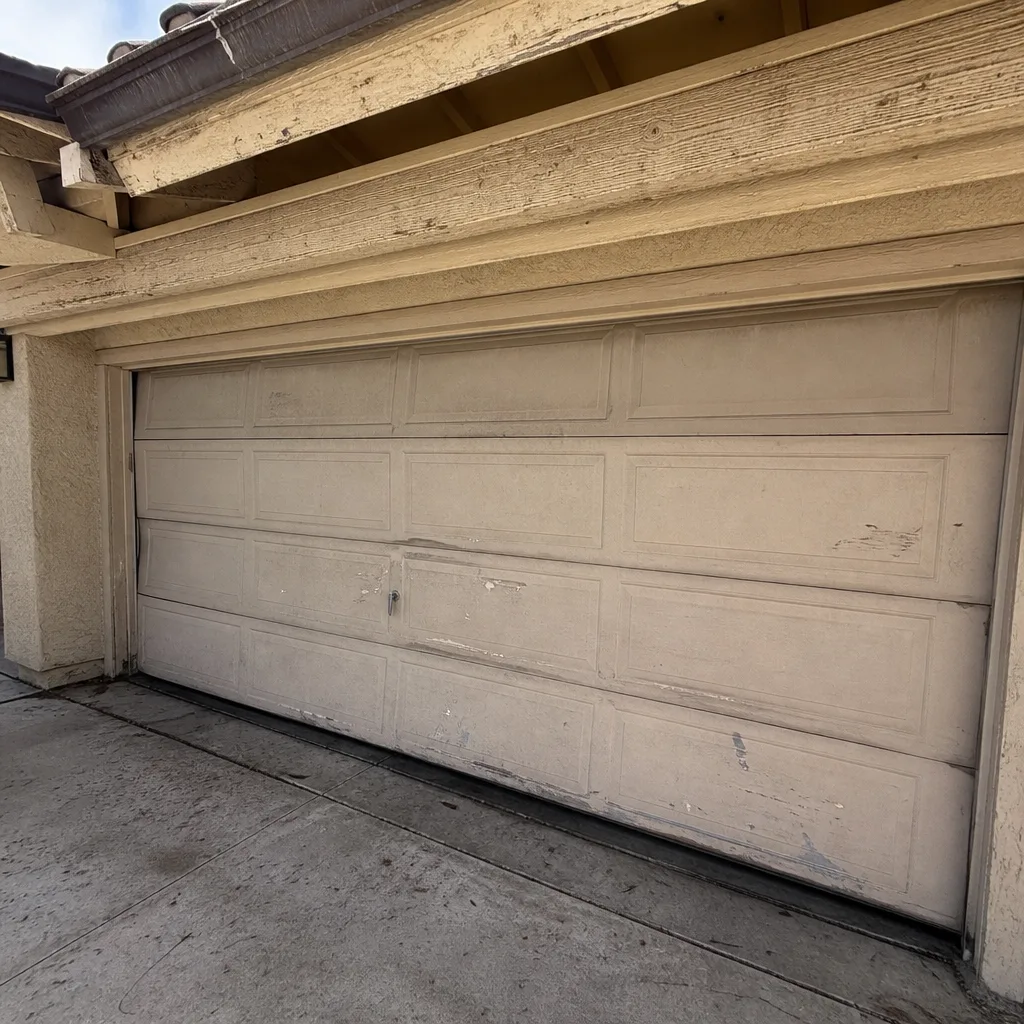
Bubbling paint or powder coating on steel panels. This is UV delamination. The factory finish on a steel garage door is a multi-layer coating system, and after enough years of direct Scottsdale sun, the bond between the primer coat and the topcoat breaks down. Small blisters form first, typically on the side of the door that gets afternoon sun, then the blisters pop and expose bare steel. Once bare steel is exposed, rust follows within one monsoon season. The fix is repainting the affected panel before corrosion sets into the metal, which is a $150-$300 job on most doors and a full panel replacement if you wait a year too long.
Cracked or brittle bottom seal and weatherstripping. The rubber seal that runs along the bottom of the door and the vinyl weatherstripping on the side jambs both have a service life of 3-5 years in Scottsdale’s dry heat. The material loses plasticizers and starts cracking along the edges. You’ll notice light visible under the closed door, or more dust and insects inside the garage than usual; both are seal failures. A bottom seal replacement is a $60-$120 part-and-labor job on most standard doors, and we recommend scheduling it before monsoon season, because the seal is what keeps monsoon runoff and scorpions out of the garage.
Rust streaks that follow the panel seams. On a steel door with a corrugated or raised-panel design, rust streaks that trace the horizontal seams indicate water is infiltrating between the steel skin and the internal insulation layer. In Scottsdale, this water is usually irrigation overspray or a downspout splash pattern, not rain. The streak pattern tells you the source: if the streaks start at the bottom and move up, it’s splash from the ground. If they start at a specific point mid-panel and flow down, there’s a gap in a seam or window frame above that point. Address the water source first, then address the rust. A section that’s rusted through the steel skin cannot be repaired cosmetically; it requires panel replacement.
The Safe-to-Use / Use-with-Caution / Stop-Using Framework
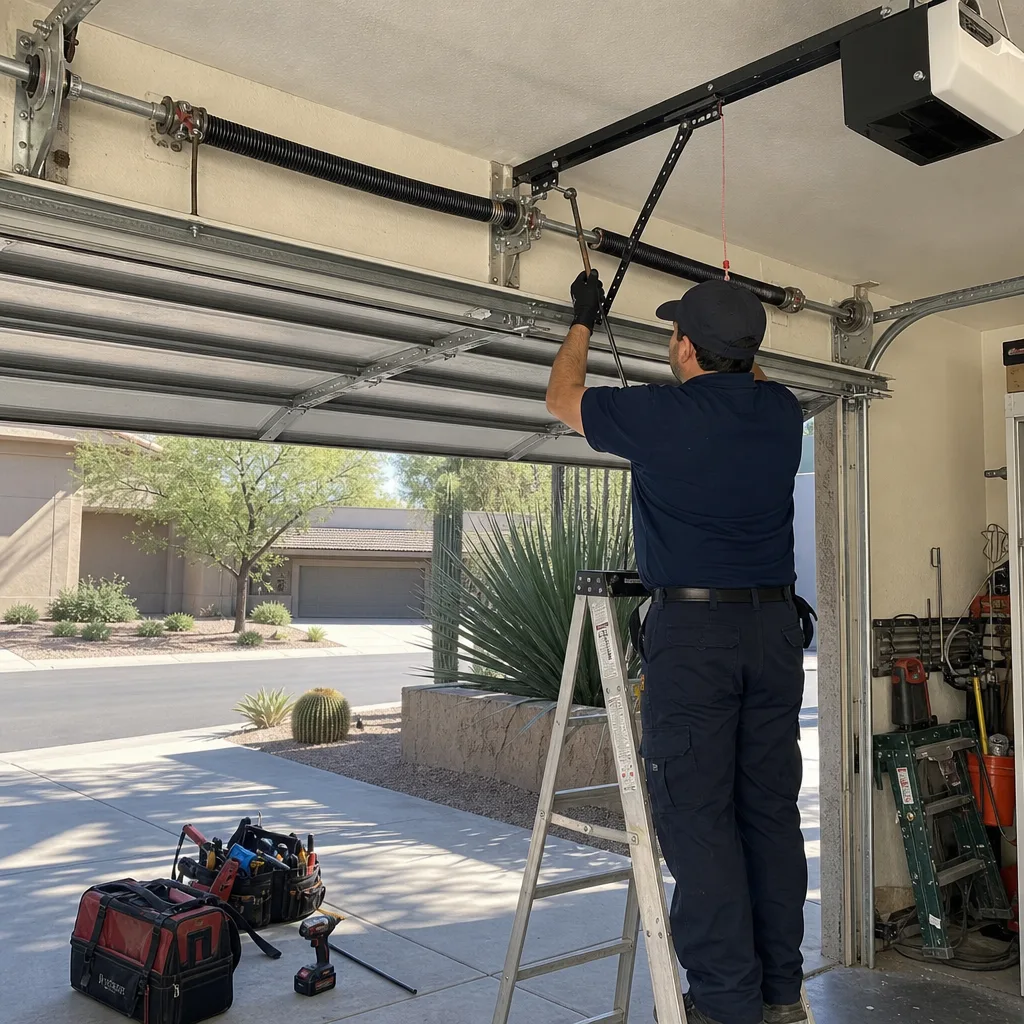
Not every warning sign demands an immediate service call. Some can be monitored. Some mean you should use the door normally but call to schedule an inspection in the next week or two. Some mean the door should not be operated until a technician has seen it. Here is a working framework based on the failure modes we’ve documented across thousands of doors in Scottsdale, and you can find more guides & resources on our blog.
Safe to Use (monitor and schedule routine maintenance)
- Squealing that is intermittent and disappears when the weather cools
- Minor cosmetic rust on the bottom panel only
- Bubbling paint on one panel with no exposed steel yet
- A bottom seal that is cracked but still making contact with the slab
These symptoms indicate aging components that are not yet affecting the door’s safe operation. The appropriate response is to photograph them, note when they first appeared, and schedule a maintenance visit when it’s convenient. Monroe Airpark and other west-side neighborhoods with direct afternoon sun will see more paint bubbling earlier than shaded communities.
Use with Caution (schedule within 2 weeks)
- Intermittent reversal on closing that corrects itself after you clean the sensor lenses
- Uneven travel that is slight (under half an inch) and consistent
- Thumping that is rhythmic but not accompanied by visible jerking
- A door that stops short occasionally but seats when you press the button twice
These signs indicate a component is wearing but not yet dangerous. The door is still structurally sound, but continued use accelerates the wear. The key is to schedule before the symptom becomes constant, because the failure mode that turns a cautious symptom into a stop-use symptom is rarely gradual at the end; it happens all at once.
Stop Using Now (disengage the opener and call same-day)
Read this carefully, because this is the category where injuries happen.
- Grinding during opener engagement that is constant, not intermittent
- Any visible gap in a torsion spring, meaning the spring has broken
- A door that has jumped a cable on one side and now hangs at an angle
- A door that slams down faster than normal when closing
- Any sound that resembles a gunshot or loud snap (that is a torsion spring breaking)
If you observe any of these, pull the red manual release cord to disconnect the door from the opener, then close or open the door manually only if it moves smoothly by hand. Do not attempt to operate a door with a broken torsion spring using the opener. The opener is not designed to lift the full weight of the door, and a stripped opener gear will add $200-$350 to a spring replacement that would have cost $180-$340 on its own. In Scottsdale, most spring replacements are done same-day by technicians who carry a full range of spring sizes on the truck; see our How to Hire a Garage Door Contractor in Scottsdale: A Step-by-Step Guide for what to ask before booking.
What to Photograph Before a Technician Arrives
You research before you call anyone. That’s exactly how we work. And the photos you take before a technician arrives serve two purposes: they document what the symptom looked like in its unaltered state, and they become the baseline against which the repair can be measured. Here is what to photograph for each warning-sign category.
- The failed or failing component in context. Stand back and take a photo that shows the entire door, then a close-up of the specific area: the roller, the hinge, the spring, the seal. Context photos help the technician identify orientation; close-ups confirm the component.
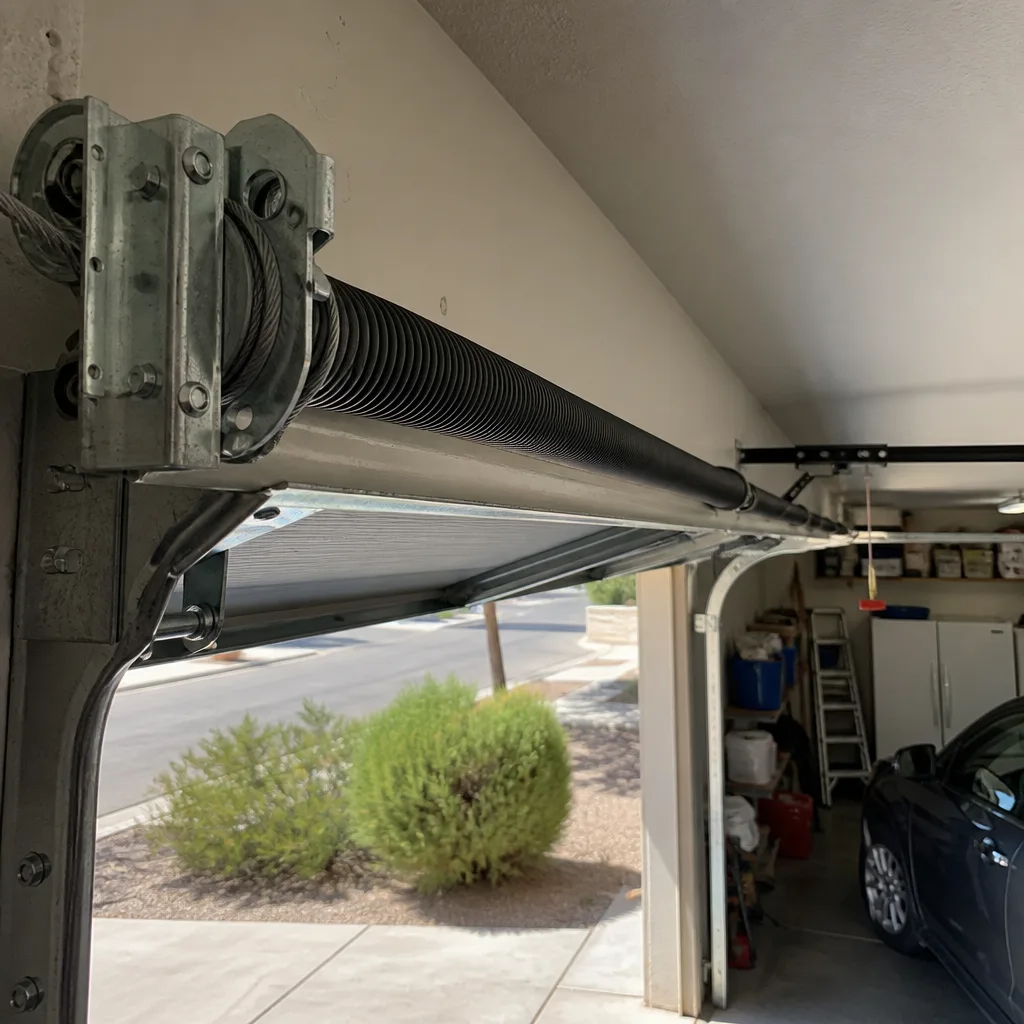
- Any visible gap, crack, or break in the spring. If you suspect a spring issue, photograph both ends of the spring and the center. A broken torsion spring typically shows a clean break at the coil, which looks like a dark gap in the coil winding. This photo is the single most useful diagnostic image you can provide.
- The rust or paint anomaly with a reference point. Place a coin or a key next to the affected area so scale is clear in the photo. Photograph the full panel and the surrounding panels; the pattern tells us whether the water source is above, below, or coming through the panel itself.
- The opener head with the front cover off. If you hear grinding from the opener, and you’re comfortable removing the plastic light-cover only (not the metal housing), a photo of the gear assembly visible inside can confirm a worn drive gear before anyone walks through the door. If you’re not comfortable, don’t touch it; the technician will take this photo during the visit.
- The door in its problem position. If the door is stuck halfway, or sitting crooked, photograph it exactly as it is before you move it. Once you pull the release cord and move the door manually, the visual evidence of the failure is gone.
This documentation habit is the same rule we apply to our own work. Clause 4 of The Haven Standard is why our technicians photograph the failed component before quoting a replacement: the customer sees what we see, and the written scope references the photo by number. Whatever the symptom, whatever the repair, the record exists.
Cost and Timeline: Fix It Now vs. Fix It After It Breaks
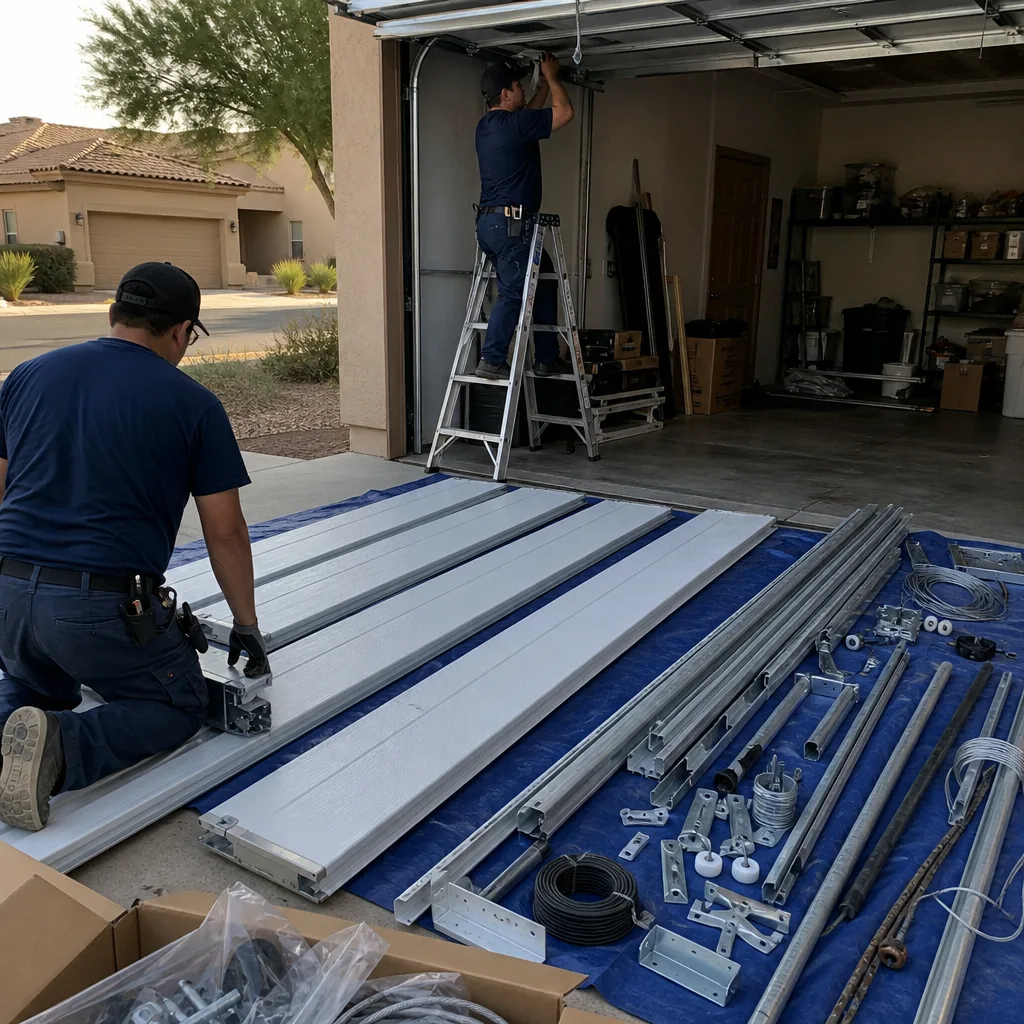
Every warning sign carries a cost-to-fix-now and a cost-to-fix-after-it-fails-completely. The difference is often larger than the repair itself, because a small failure in a system under tension becomes a cascading failure within days or weeks.
| Warning Sign | Likely Component | Fix It Now | After Full Failure | Timeline |
|---|---|---|---|---|
| Grinding on engagement | Drive gear or roller | $90-$180 | $250-$450 (adds stripped gear replacement) | Days to weeks |
| Squealing during travel | Roller bearings | $120-$200 for full roller set | $180-$400 (adds track damage or bent hinge) | Weeks to months |
| Broken torsion spring | Torsion spring | $180-$340 | $400-$700 (adds opener damage, cable damage, or panel damage) | Immediate |
| Door won’t seat fully | Limit switch or spring | $80-$150 | $180-$340 (spring replacement when tension fails) | Weeks |
| Rust streaks at panel seams | Panel corrosion | $50-$100 to address water source plus sealant | $400-$900 (full panel replacement) | Months |
| Cracked bottom seal | Bottom weatherstrip | $60-$120 | $200-$500 (adds moisture and pest damage to stored items) | Months |
These are Scottsdale market ranges based on the doors we service every week, from the tract-built subdivisions of Grayhawk to the custom homes in Paradise Valley. Your specific quote may differ based on door size, brand (we service Clopay, Amarr, Genie, Wayne Dalton, and all major manufacturers), and access. What doesn’t change is the principle: the price is a flat, written number agreed to before any work begins, per Clause 1 of The Haven Standard. “Call for a quote” is not how we operate. The price is on the page, in writing, before a wrench touches the door.
Common Mistakes to Avoid
- Ignoring a grinding sound because the door still works. The door works until the moment it doesn’t, and the moment it doesn’t is when the gear strips completely and the door is stuck in the open or closed position. The failure is never conveniently timed.
- Spraying lubricant on the tracks. Over-lubricating the vertical tracks is the most common DIY mistake we see across Scottsdale. The tracks are not a lubricated surface; buildup attracts dust and grit, which accelerates roller wear. Lubricate the roller bearings, the hinges, and the spring coils, not the track channel.
- Adjusting the limit switch without marking the original position. If you adjust a limit switch, take a photo of the setting first. Without a reference, you can chase the correct position for hours, and we see misadjusted limit switches cause as many service calls as the original symptom.
- Using the opener after a spring breaks. The opener is not designed to lift a door whose spring has failed. Every cycle you run after the break adds more strain to the opener gearbox and can turn a $250 spring job into a $600 spring-and-opener job.
- Driving a car under a door that hesitates or reverses. If the door reverses on the way down, treat it as a sensor or limit issue until proven otherwise. A door that reverses unpredictably is a door that could close on a vehicle or a person.
- Ignoring rust because “it’s just cosmetic.” On a steel door, rust is never cosmetic. It’s a structural signal that water is reaching the metal, and in Scottsdale’s boom-and-bust moisture cycle, a small rust streak becomes a rust-through faster than in wetter climates because the episodes of moisture are separated by long, dry oxidation periods.
- Waiting for the door to fail before calling because you don’t know what it will cost. This is the one we hear most often in Scottsdale: “I put it off because I didn’t want to get a surprise bill.” The surprise is the point of the way we work. The price is written and flat before work starts. There is no discovery-invoice scenario.
When to Call a Professional
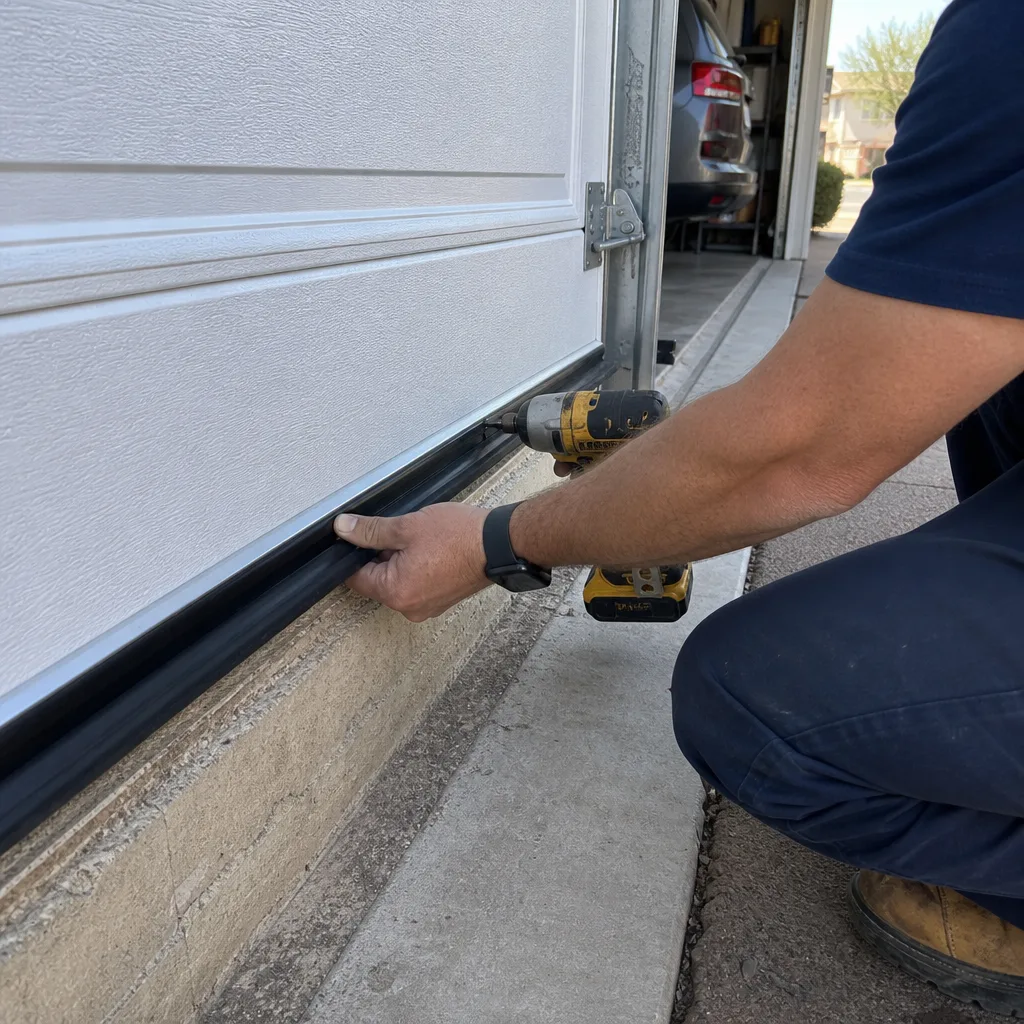
Call when the symptom is in the stop-using category: grinding during opener engagement, a visible gap in a torsion spring, a door that has thrown a cable, or any snapping sound. Call when a symptom has moved from intermittent to constant, because that transition is the early phase of a component’s final failure curve. And call when you don’t know what something means; that’s what the free, documented inspection is for. If you’re in Scottsdale and you’re not sure whether your door is safe to use, Garage Door Repair in Scottsdale covers the full diagnostic and repair process, and the estimate is free and written. Call (928) 363-3551 and a real person answers, 24/7, including holidays; you’ll get a named technician and an on-the-way text, not a callback window.
One more note that matters to Scottsdale homeowners specifically: if you’re researching because your door is showing any of these signs and you’re also due for a new door, Garage Door Installation in Scottsdale walks through the full process, including the written scope and the 365-Day Done Right Promise. Installation work is measured, ordered, and scheduled; it’s not a same-day repair, which is worth knowing before you call.
Frequently Asked Questions
The most common warning signs we see across Scottsdale are grinding during opener engagement (worn drive gear), squealing during door travel (failing roller bearings), and rust streaks tracing panel seams on steel doors (water infiltration through the panel or around window frames). In summer, we also see an increase in false sensor reversals from direct sunlight hitting the photo-eye lenses on south- and west-facing garages.
Most garage door repairs in Scottsdale run between $90 and $450, depending on the component: a roller set replacement is typically $120-$200, a drive gear replacement is $90-$180, a torsion spring replacement is $180-$340, and a panel replacement for rust-through runs $400-$900. Every quote from us is a flat, written price delivered before any work starts, so the number you read is the number you pay. Call (928) 363-3551 for a free estimate on your specific door.
Most repair issues, including broken springs, worn drive gears, and roller replacements, can be fixed same-day because our technicians carry a full parts inventory on the truck. Installation and full door replacement are scheduled jobs that start with a free measure and a written price. For a same-day repair assessment, call (928) 363-3551; a live person answers 24/7, including during monsoon-season emergencies.
It depends on the sound. Squealing from roller bearings is generally safe to use for a short period while you schedule a replacement. Grinding from the opener drive gear is not safe to continue using; every cycle accelerates the gear wear and adds $150-$300 to the eventual repair. A snapping sound, followed by the door not rising, is a broken torsion spring; do not use the opener, and call for service immediately.
Not necessarily. If the rust is superficial and the steel skin is intact, the panel can often be sanded, primed, and repainted for $150-$300. If the rust has penetrated through the steel, which looks like flaking metal or holes visible from the inside of the garage, the panel needs replacement. The first step is addressing the water source that caused the rust; in Scottsdale, that’s typically irrigation overspray, a downspout splash pattern, or a leaking seal around a window frame.
Frequent false reversals are usually caused by misaligned photo-eye sensors, dust or debris on the sensor lenses, or direct sunlight overwhelming the sensor’s receiver. The photo-eye at the bottom of each door track sends an infrared beam across the opening; if that beam is broken or washed out by bright light, the opener treats it as an obstruction and reverses. Cleaning the lenses and shading the receiver-side sensor from direct afternoon sun resolves about 80% of these calls. If the problem persists, the issue is usually the sensor wiring harness or the logic board itself, which is a repair, not an adjustment. If you’ve already checked the sensors and the door still reverse, Garage Door Opener Repair & Installation in Scottsdale covers the full diagnostic path, from sensor alignment to logic board replacement.
The Bottom Line
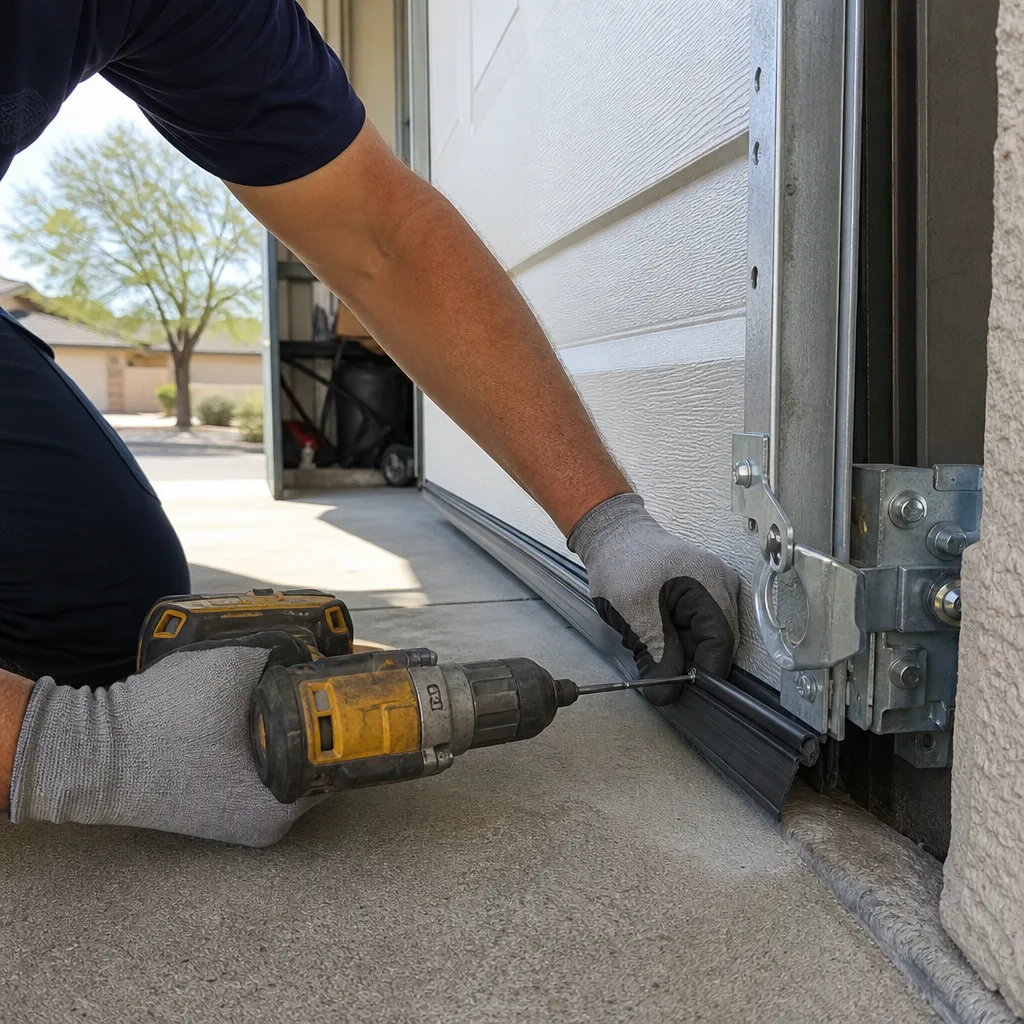
Garage door warning signs are specific, diagnosable, and time-bounded. A grinding drive gear doesn’t become a quieter drive gear; it becomes a stripped gear and a door that won’t move. A cracked bottom seal doesn’t heal itself; it becomes a monsoon leak and a pest entry point. The difference between a $120 roller replacement and a $450 cascade repair is the time between noticing a symptom and acting on it. In Scottsdale, where the heat accelerates material fatigue and the monsoon season punishes every gap in a door’s envelope, the cheapest repair is the one scheduled while the symptom is still early. We’ve been doing this since 2015, and every one of the 18,000-plus doors we’ve made right came with the same two things: a written price before any work started, and a documented photo record when the technician left. That’s the standard we work to, and it applies whether you call us or someone else. If it’s your door, get it looked at before it makes the decision for you. Our Servo Garage Doors Scottsdale home page has the full scope of what we handle, or call (928) 363-3551 for a free, written estimate.
Written by Marcus Deller, Owner at Servo Garage Doors Scottsdale, serving Scottsdale since 2015.