
Last updated September 20, 2026
Full 25-point door and opener safety check with every visit - springs, cables, rollers, tracks, and your LiftMaster or Chamberlain opener included
You get a price before we start. It does not change when the truck arrives.
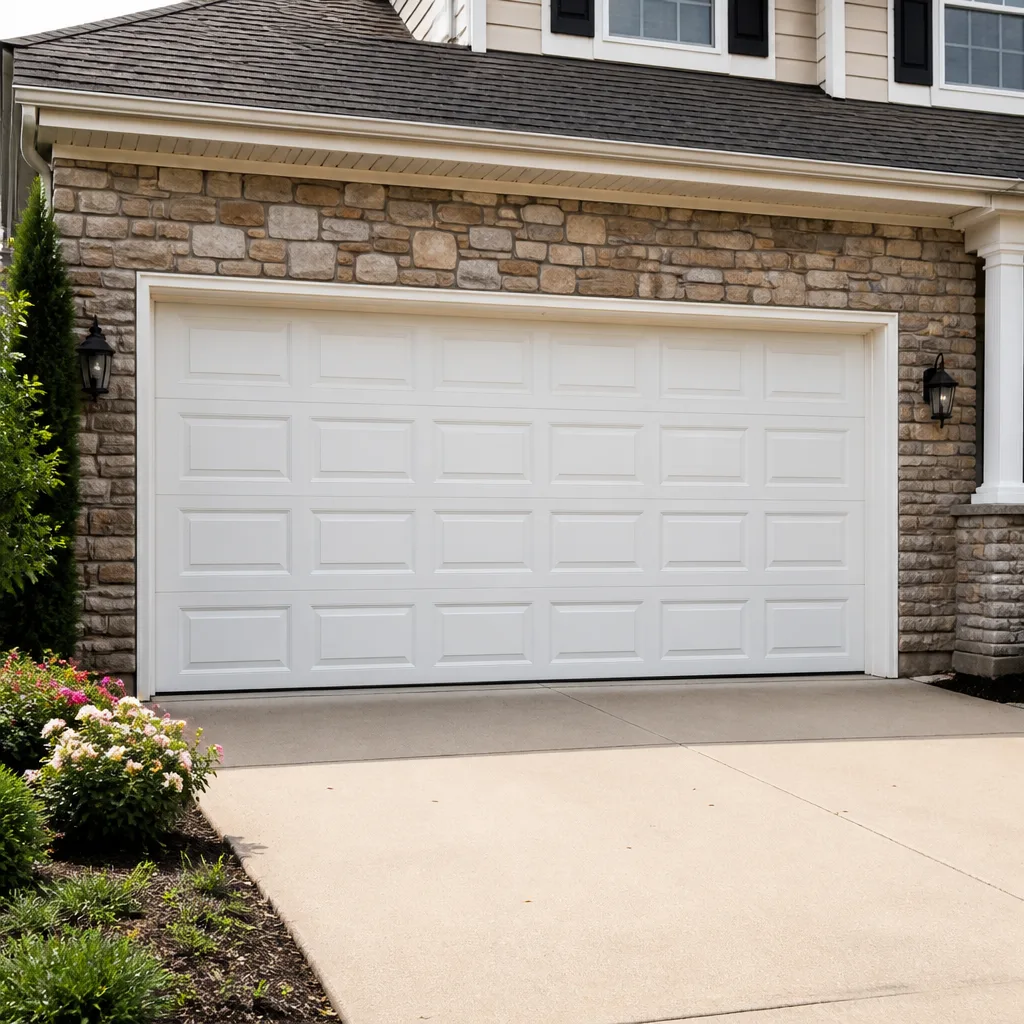
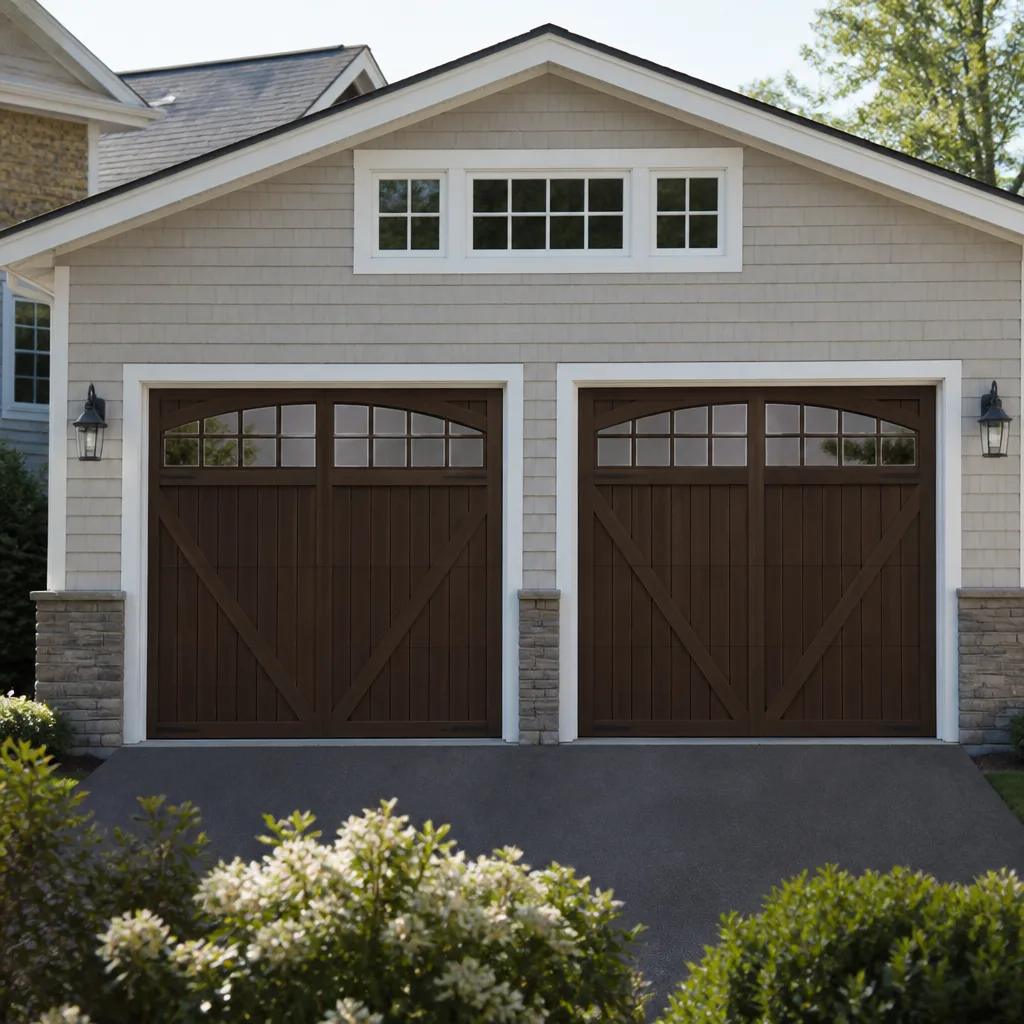
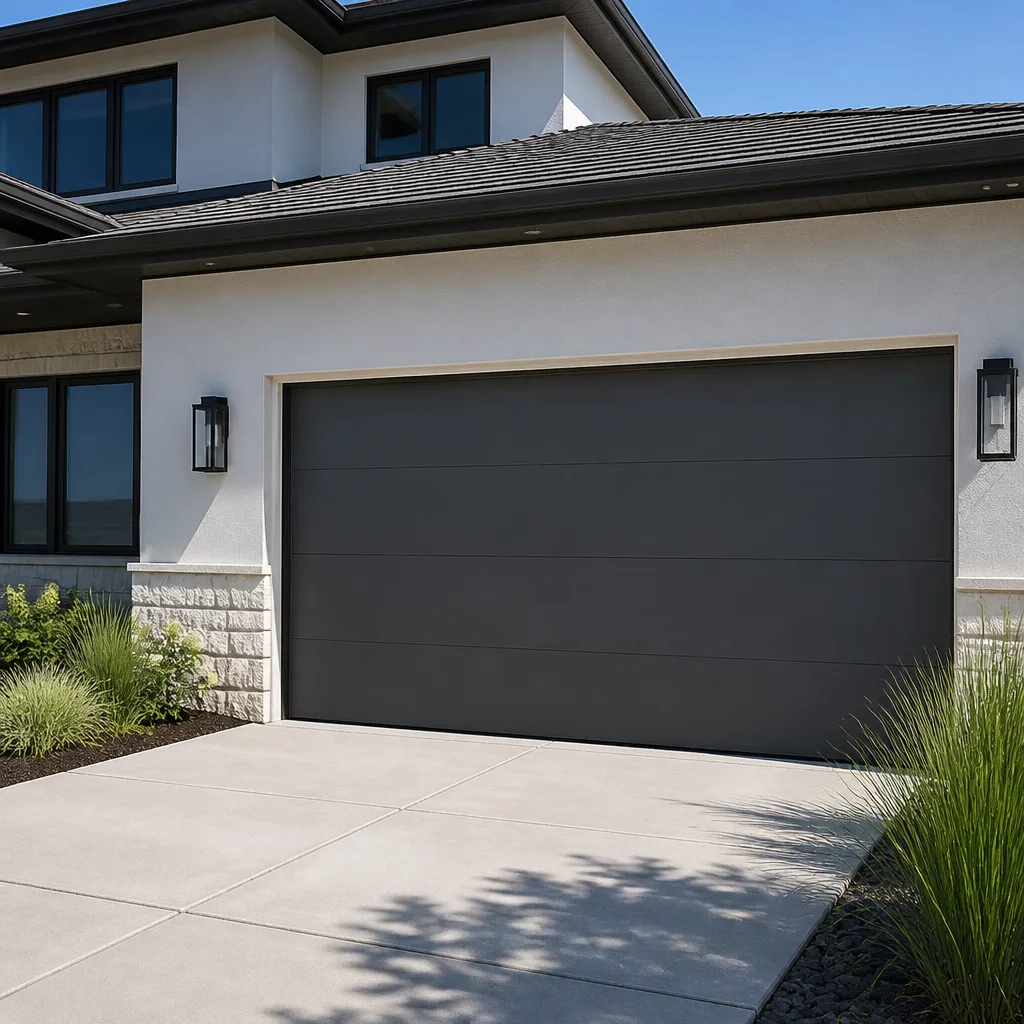
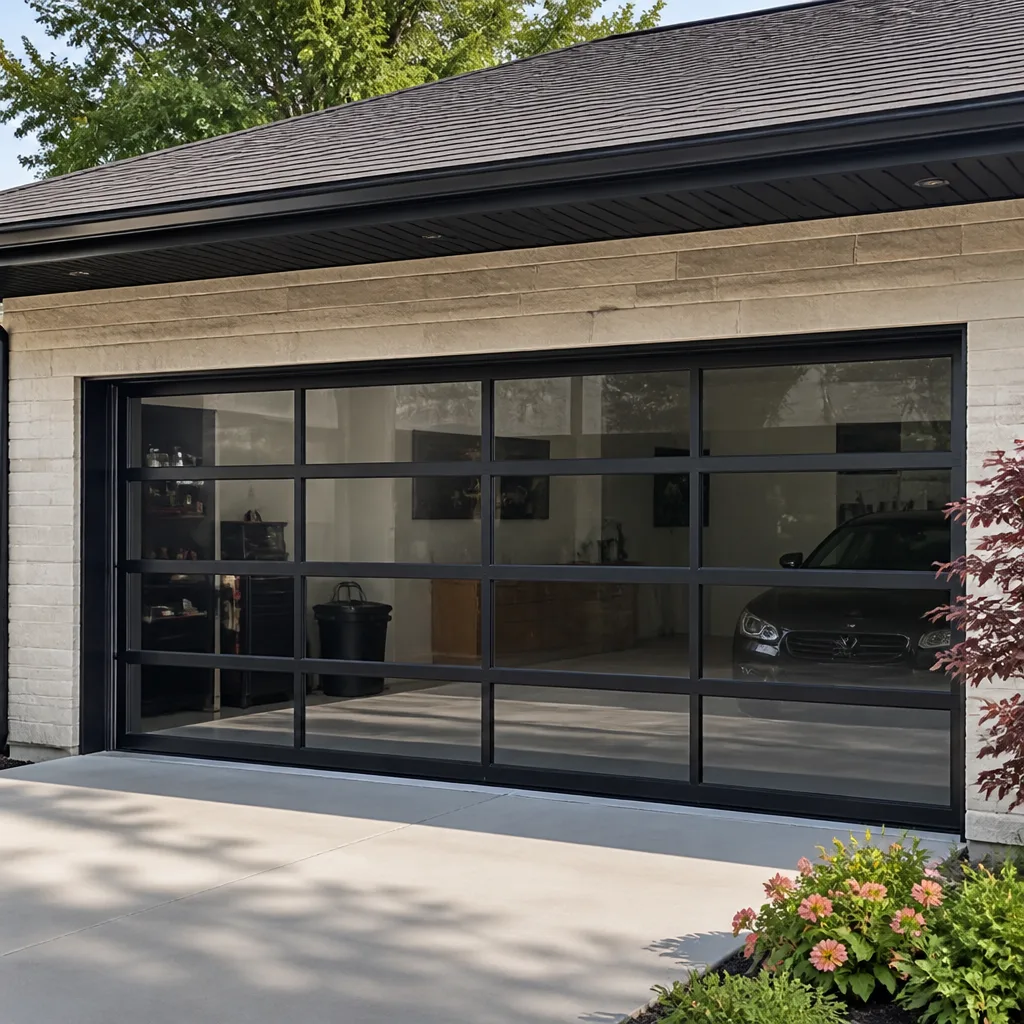
 Before
 After
After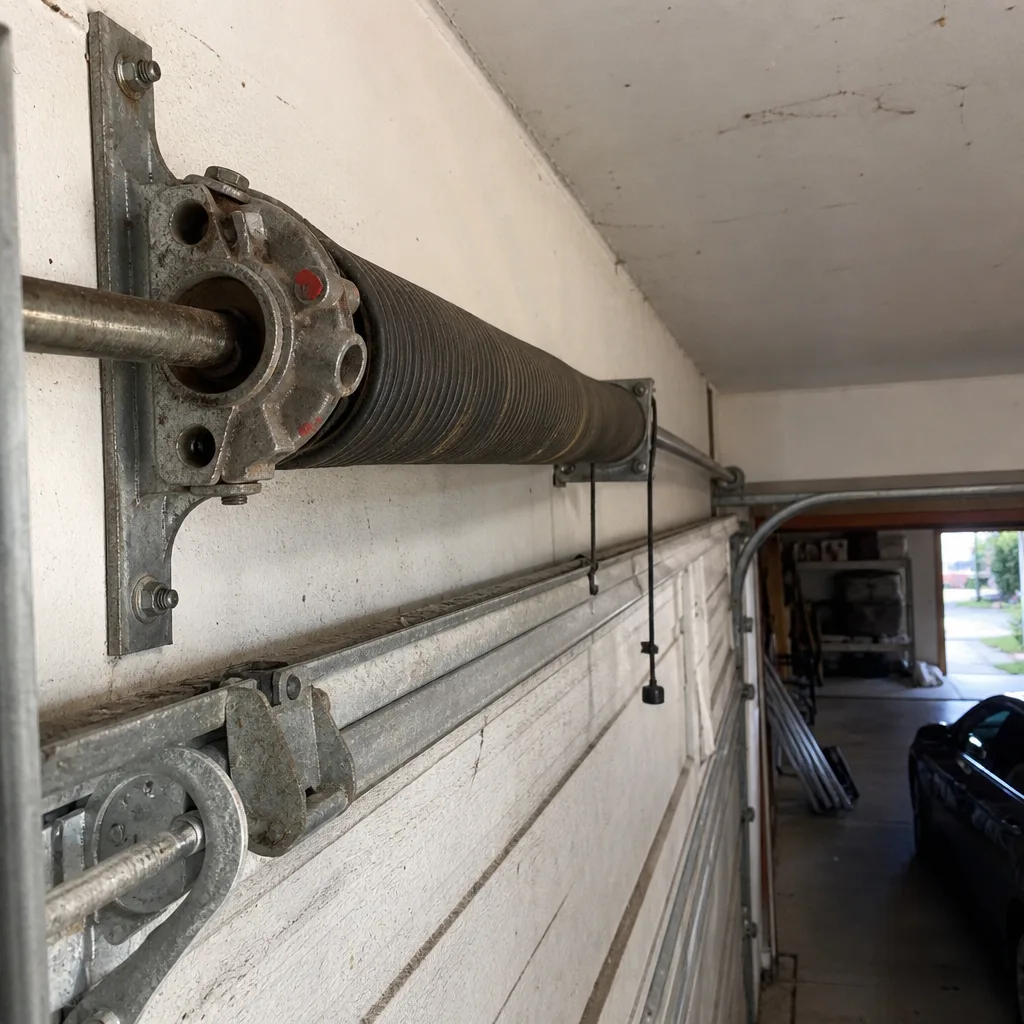 Before
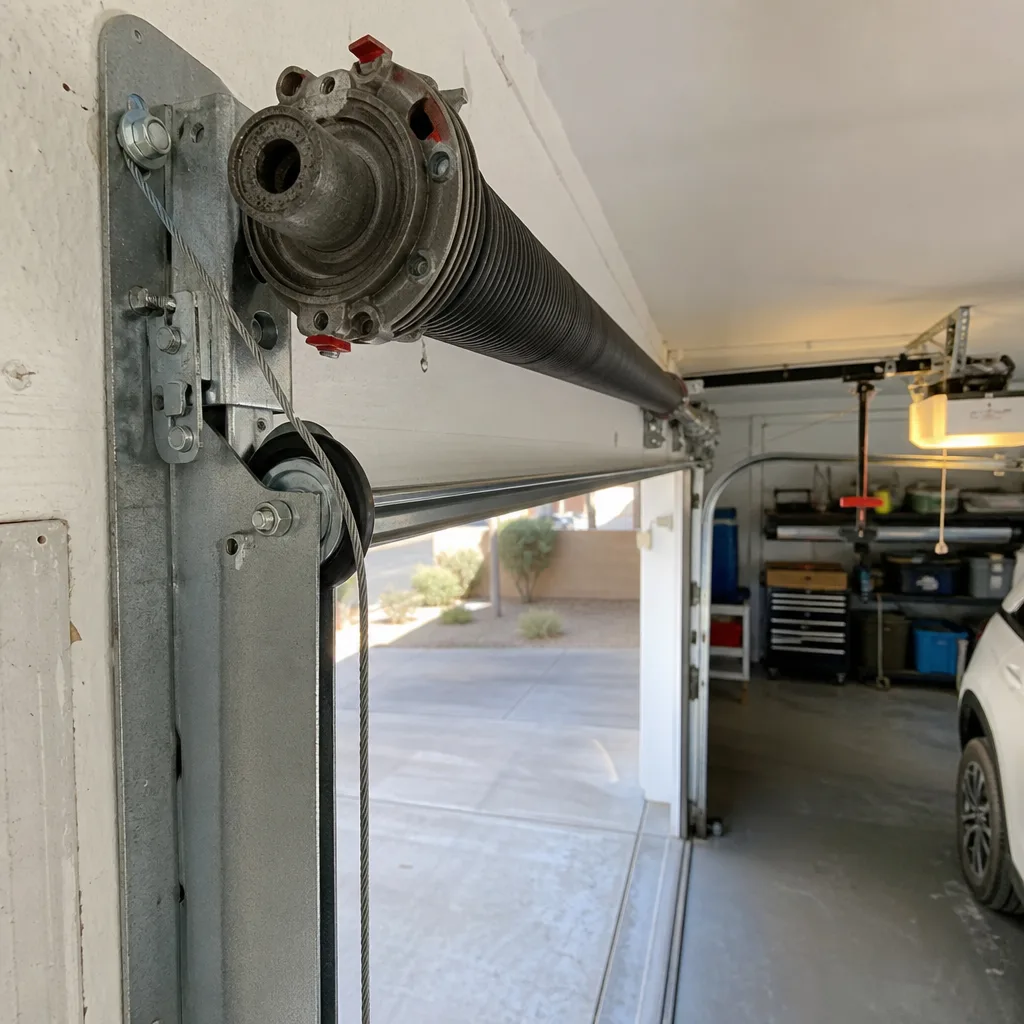 After
After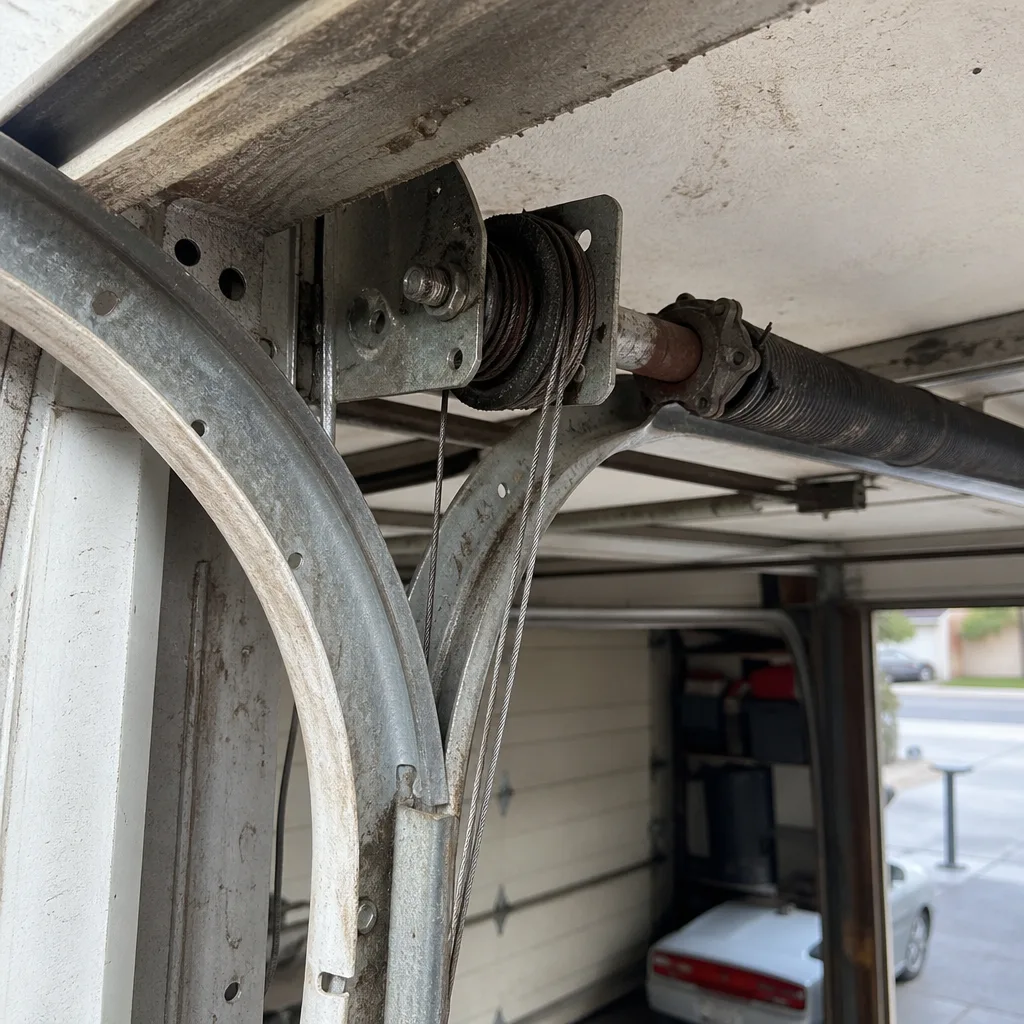 Before
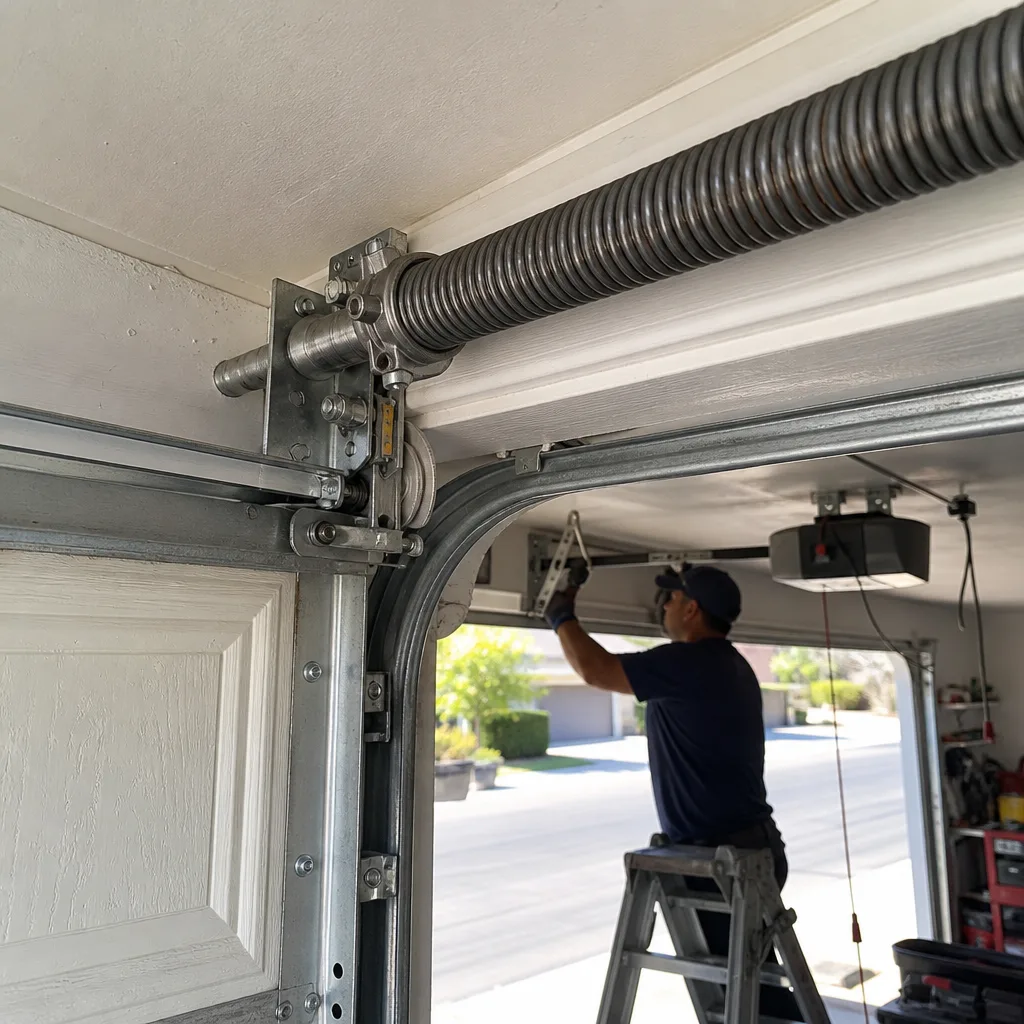 After
AfterThe Complete Guide to Garage Door in Scottsdale
Scottsdale logged 299 days of sun in 2023. That’s not a chamber-of-commerce talking point; it’s a wear-and-tear specification for every exterior component on your property, and your garage door takes the brunt of it. A panel that survives a decade in Chicago fails noticeably faster in the Sonoran Desert because ultraviolet radiation at this latitude embrittles the polystyrene core behind the steel skin, and the 40-degree overnight-to-afternoon thermal swing doesn’t just stress the door itself, it cycles the torsion spring through fatigue conditions most manufacturers don’t test for. This guide walks the full lifecycle of a Scottsdale garage door, from panel selection through spring replacement and opener drive failure, with the local variables named at each stage.
Quick Answer
The complete guide to a garage door in Scottsdale means understanding that desert heat accelerates spring failure roughly 40% faster than national averages, UV index 11+ conditions dictate panel material choice, and caliche dust dictates roller and track maintenance on a schedule tighter than any general-market manual will tell you. The most cost-effective approach is to spec a door for the Sonoran climate at purchase, replace torsion springs preemptively at the 7-year mark, and lubricate nylon rollers every 4 months during the dusty bloom season.
Table of Contents
- How Scottsdale’s Thermal Swing Shortens Torsion Spring Life
- Panel Material Comparison: Steel Gauge, Aluminum, and Fiberglass Under UV Index 11+
- Caliche Dust and Roller Failure: Spec’ing Sealed Bearings for the Scottsdale Soil
- Maricopa County Permit Triggers: Replacement-in-Kind vs. Structural Header Work
- Desert-Calibrated Component Lifespan Table
- The Scottsdale Maintenance Schedule That Actually Fits the Climate
- Opener Drive Systems in Scottsdale Heat: Chain vs. Belt vs. Screw
- Common Mistakes to Avoid
BeforeAfterHow Scottsdale’s Thermal Swing Shortens Torsion Spring Life
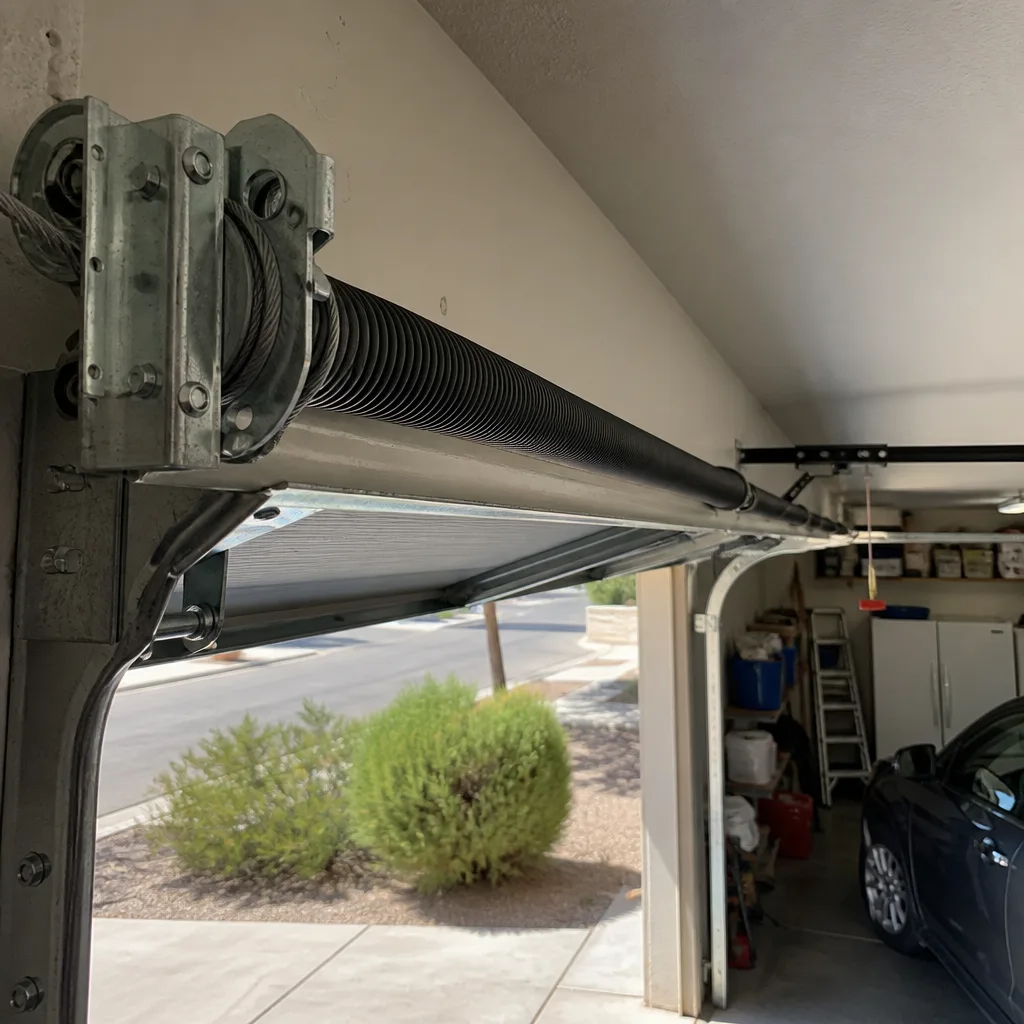
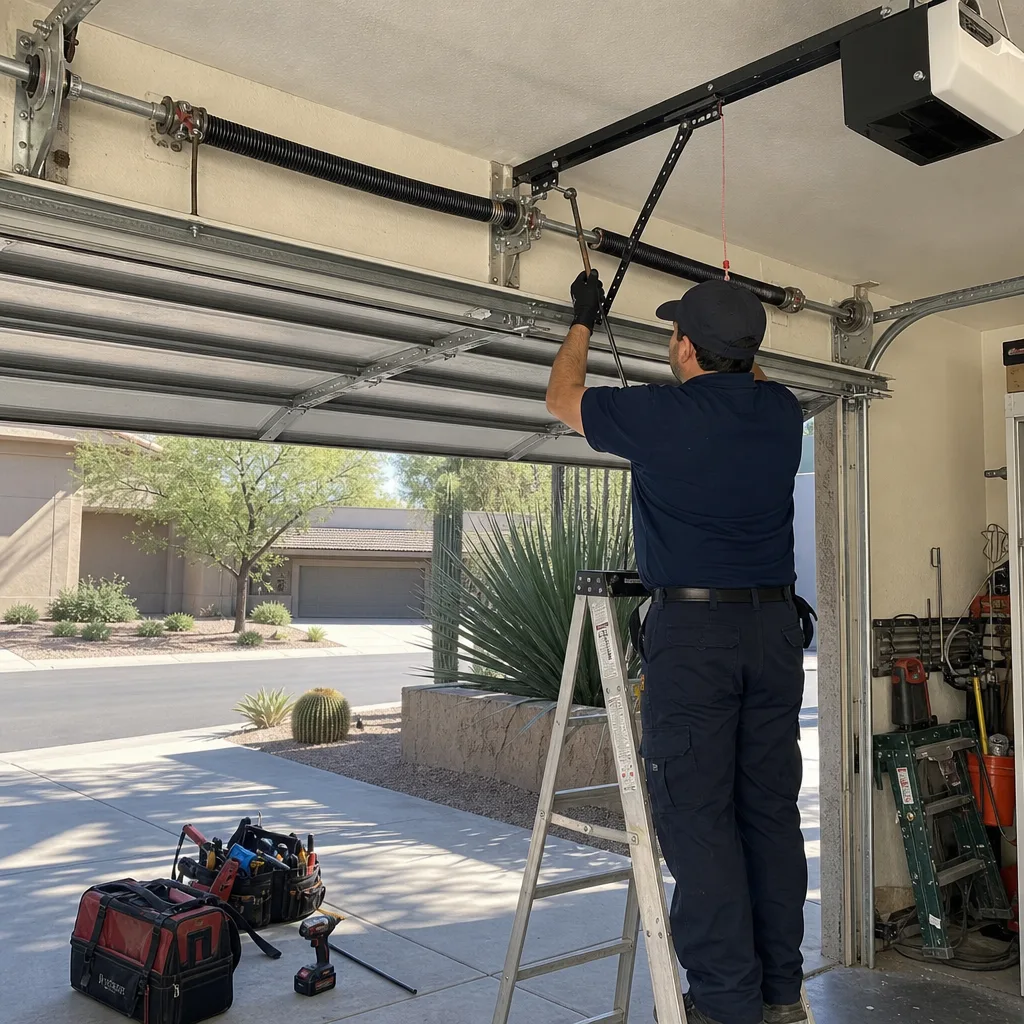
A torsion spring is a coil of high-carbon steel wound to a specific torque. It stores the energy that lifts your door. When it fails, it fails catastrophically: a loud snap, a door that won’t lift more than six inches, a cable that slaps loose on the drum. The national average lifespan for a standard torsion spring is 10,000 cycles, which manufacturers translate to roughly 10 years of normal use. In Scottsdale, that number drops. We’ve measured springs coming off homes in Gainey Ranch and McCormick Ranch with clean fractures at the coil at 7 years, not 10.
The cause is thermal expansion and contraction. Scottsdale swings from 40 degrees before sunrise in January to 110 degrees by 4 p.m. in July. That’s a 70-degree daily spread across the hottest contiguous stretch of the year. Steel expands and contracts with every degree of change. A torsion spring under tension doesn’t just sit in the heat; it micro-flexes thousands of times per season as the ambient temperature climbs and falls. Each micro-flex cycles the steel at a microstructural level, propagating fatigue cracks earlier than the test-lab baseline would predict.
What this means for a Scottsdale homeowner:
- Expect 7-9 years, not 10+, from a standard 10,000-cycle spring in this climate.
- Ask for a high-cycle spring, rated at 25,000 cycles or more, when you replace. The incremental cost is modest; the lifespan in Scottsdale conditions effectively doubles.
- Listen for the creak-and-groan in July. Springs that make noise on hot afternoons are telling you the coil is binding. That’s the warning sign before the snap.
Regular maintenance catches the early warning. Torsion springs that look fine to the untrained eye can be mid-failure at the coil. Spring inspection is one of the few areas where we genuinely recommend a professional’s eye, because the stored energy in a loaded torsion spring is enough to break an arm if it lets go. That said, we also recommend asking any technician to show you the spring measurement. Ours will, which is what Clause 4 of The Haven Standard requires: the failed part gets photographed before a replacement is quoted. The customer sees the fracture. No one is guessing.
For a deep look at what spring failure costs and how our Garage Door Repair in Scottsdale process works, that linked page covers the dollar ranges and what to expect from a service call.
Panel Material Comparison: Steel Gauge, Aluminum, and Fiberglass Under UV Index 11+
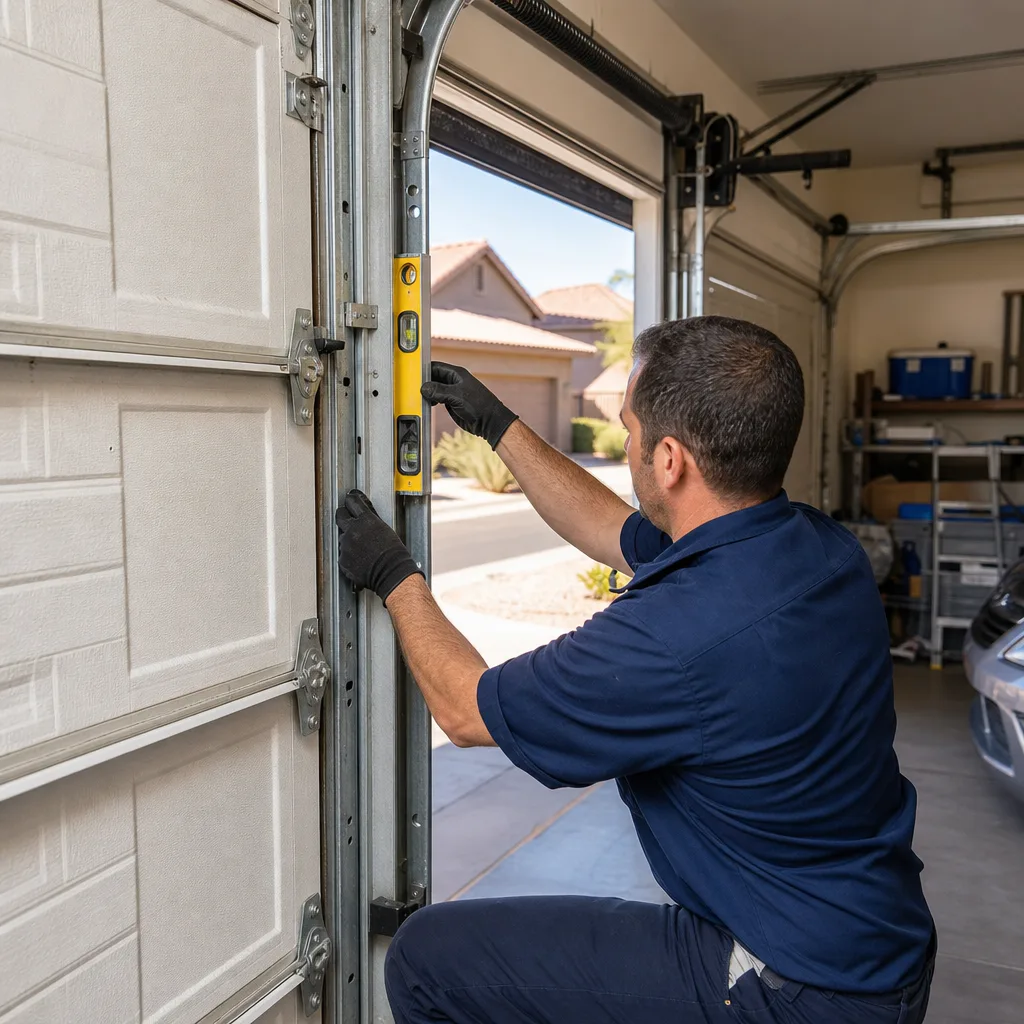
Most national buying guides rate panel materials by climate zone. Zone 4, Zone 5, insulated or uninsulated. Scottsdale doesn’t fit neatly into those zones because the limiting factor here isn’t winter cold; it’s sustained UV exposure and a surface temperature that hits 160 degrees on a south-facing panel in August. Materials perform differently under those conditions.
24-Gauge vs. 28-Gauge Steel Panels
Steel is the most common residential panel material in Scottsdale, and for good reason: it resists warping and dents better than aluminum, and it takes a factory paint or powder-coat finish that holds up under UV. The gauge number matters more in Scottsdale than it does in, say, Columbus. A 28-gauge panel (the thinner steel, higher number) is easier to dent, which matters less in the desert, but it also flexes more under thermal load, which accelerates paint micro-cracking. We recommend 24-gauge steel as the minimum for south- and west-facing doors in Scottsdale, and it’s not a small difference: 24-gauge steel is roughly 25% thicker than 28-gauge. The thicker panel shrugs off the thermal expansion and holds its paint longer.
Polystyrene-backed steel panels are the default “insulated” option. In Scottsdale, the insulation isn’t doing what the marketing says. An uninsulated garage in Scottsdale in July isn’t a 20-degree difference from the outdoors; it’s a 10- to 12-degree difference at peak heat. The real problem is that the polystyrene core breaks down under sustained UV-driven thermal load. The core shrinks at a different rate than the steel skin, and over 5-6 years the skin can delaminate. We’ve seen delamination on doors facing south in Grayhawk that still look fine from the street: a slight bubble, a crease at the bottom rail, a rattle when the opener runs.
Aluminum Panels
Aluminum won’t rust, which sounds like the right choice for a desert until you inspect what actually happens here. Aluminum panels in Scottsdale hold up well structurally but show heat wear through the finish. Powder-coated aluminum fades faster than powder-coated steel under UV index 11+ because the substrate transfers heat faster. We’ve replaced aluminum doors in DC Ranch where the finish had chalked and oxidized within five years, while steel neighbors with the same exposure looked better. Aluminum also dents more readily, and Scottsdale’s monsoon season delivers its share of wind-blown branches and airborne debris.
Aluminum is the right call for one specific circumstance: a coastal or high-humidity environment, which Scottsdale is not. For the Sonoran, steel is generally the better value.
Fiberglass Panels
Fiberglass does one thing exceptionally well: it doesn’t dent. It does one thing poorly in Scottsdale: it fades and becomes brittle under sustained UV. Fiberglass panels can survive the heat but not the sun. We rarely spec fiberglass for south-facing doors in Scottsdale. For north-facing or deeply shaded lots, it’s acceptable. For most homes, the UV math on fiberglass doesn’t work.
Clopay and Amarr both make steel doors specifically rated for high-UV regions, and their 24-gauge lines with the polyurethane core (not polystyrene) are the ones we see performing best after a decade in Scottsdale sun. Polyurethane cores are denser and less prone to the delamination we described above.
Caliche Dust and Roller Failure: Spec’ing Sealed Bearings for Scottsdale
Caliche is the calcium carbonate-rich soil layer that sits just under the topsoil across most of Maricopa County. It’s the reason driveways crack in a distinctive pattern and why desert landscaping uses granite fines instead of topsoil. It’s also the single most under-discussed variable in garage door maintenance in Scottsdale.
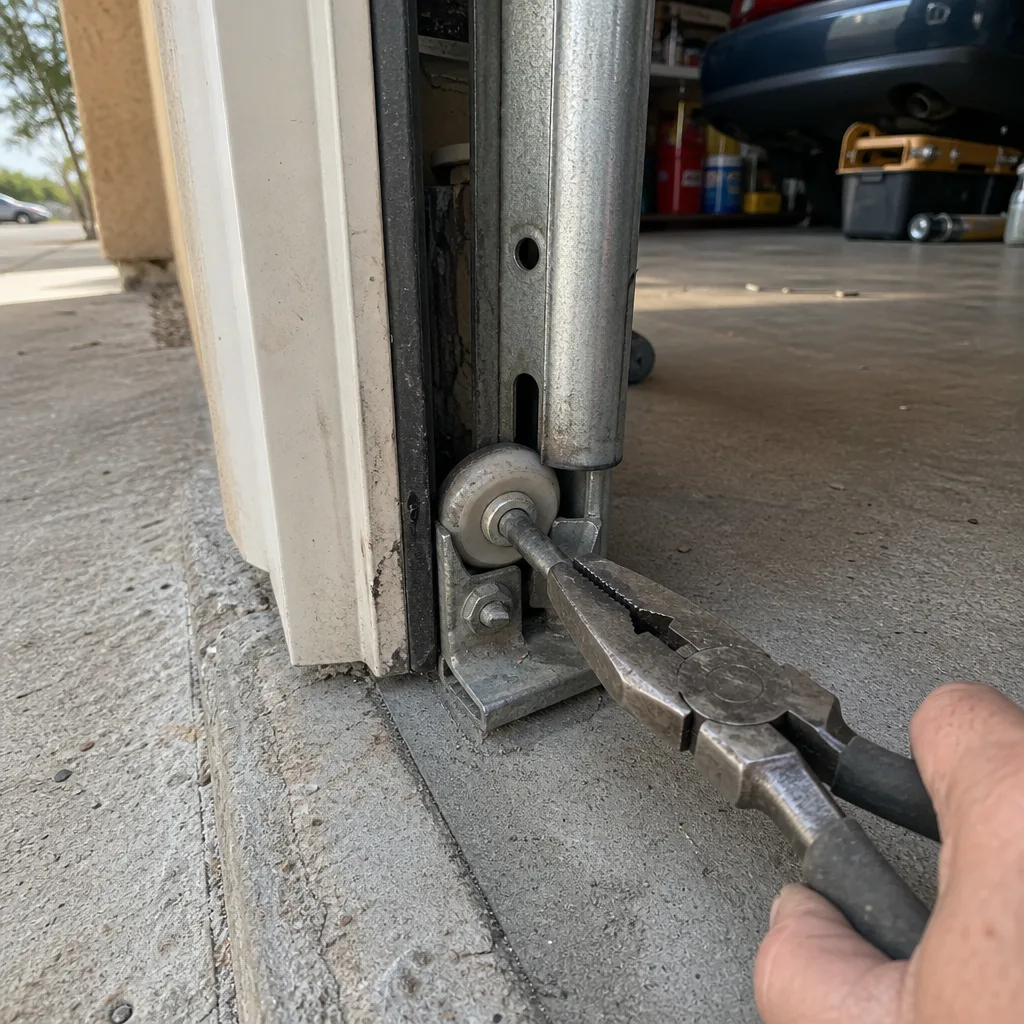
When caliche dust goes airborne during dry months and monsoon wind events, it’s fine enough to infiltrate the roller assemblies on your door tracks. Nylon rollers, the default on most mid-grade doors, have unsealed ball bearings in many builds. The bearings sit inside a plastic race. Caliche dust creeps into that race and mixes with whatever grease is present, forming a mildly abrasive paste. Over a single Scottsdale summer, that paste accelerates bearing wear substantially. The symptom is a door that gradually gets louder, then starts to “chatter” or vibrate on the way up and down.
What we spec for Scottsdale homes:
- Sealed-bearing nylon rollers, not unsealed. The sealed bearing keeps caliche dust out of the race. The difference in lifespan in Maricopa County conditions is 2x-3x.
- No steel rollers. Steel rollers are louder and ride harder on the track, and the caliche dust accelerates their wear faster than nylon. They’re cheaper up front, more expensive long-term.
- Quarterly track inspection and lubrication. Most national manuals say every 6 months. In Scottsdale, the dust load makes 4 months the right interval during the May-June dry season and the July-September monsoon period.
The lubrication itself matters too. A thin white lithium spray applied to the track and roller bearings works. A heavy grease fills the race, traps the caliche, and makes the abrasive paste faster. We lubricate with a light touch and document the roller condition in the photo record we leave on every visit.
Maricopa County Permit Triggers: Replacement-in-Kind vs. Structural Header Work
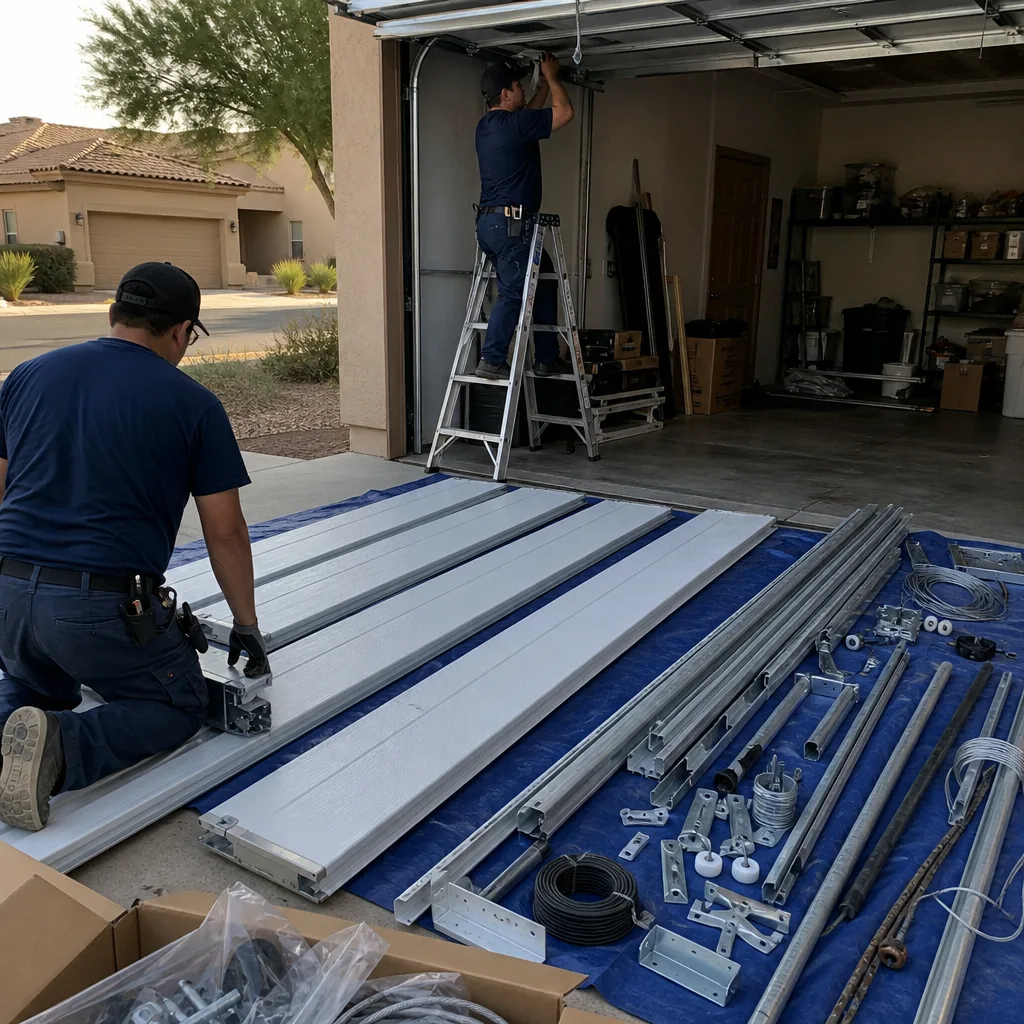
Garage door work in Scottsdale sits inside Maricopa County’s unincorporated building codes and the City of Scottsdale’s municipal code, depending on where the property sits. For a deeper look at requirements, see our guide to Garage Door Permits, Codes & Inspections in AZ: What You Need to Know. The trigger for a permit is not the door; it’s the opening. A simple replacement-in-kind, where you’re swapping a door for a door of the same rough opening and not touching the header, jamb, or structural framing, does not require a permit in most Scottsdale residential scenarios. That covers the majority of garage door replacements we do.
Where a permit does get triggered:
- Changing the rough opening size. If you’re enlarging or reducing the opening, you’re modifying structural framing, and that requires plan review and inspection.
- Modifying the header. The header is the load-bearing beam above the door. Any cut, notch, or reinforcement to the header requires engineering and a permit.
- Adding a new opening where none existed. Cutting a garage door into an existing wall is structural work, full stop.
- Converting from one door to two, or two doors to one. This changes the load path on the header and requires permitting.
For replacement-in-kind, no permit is required, but we always recommend pulling the original installation specs if you can find them. Knowing the rough opening size, the track radius, and the spring line from the original install makes the replacement cleaner. If the original installer left a sticker or plate on the door jamb with the install date and spec, that’s gold.
Desert-Calibrated Component Lifespan Table
Every national garage door guide publishes a component lifespan table. Almost all of them use manufacturer test conditions in temperate climates. Here’s our calibrated table, based on the Scottsdale homes we’ve worked on since 2015, in conjunction with the heat, UV, and dust conditions described above.
| Component | National Average Lifespan | Scottsdale Expected Lifespan | Primary Desert Failure Mode |
|---|---|---|---|
| Torsion spring (10k cycle) | 10 years | 7-8 years | Thermal fatigue at the coil |
| Torsion spring (25k cycle) | 15+ years | 12-14 years | Same, delayed |
| Steel panel (24-gauge, polyurethane core) | 20+ years | 15-18 years | UV fade, delamination on south-facing |
| Steel panel (28-gauge, polystyrene core) | 15 years | 8-10 years | Delamination, paint micro-cracking |
| Nylon roller (sealed bearing) | 10 years | 7-9 years | Caliche dust ingress |
| Nylon roller (unsealed) | 7 years | 4-5 years | Caliche dust ingress, rapid |
| Opener logic board | 12-15 years | 10-12 years | Heat cycling on garage ceiling |
| Door seal (bottom rubber) | 5-7 years | 3-4 years | UV embrittlement and cracking |
These numbers are not manufacturer claims; they’re the observed pattern across thousands of doors in Scottsdale and the surrounding metro. The takeaway: plan spring and seal replacement on a compressed schedule compared to national guidance, spec the higher-cycle spring and sealed-bearing roller at install, and choose panel gauge for south exposure.
The Scottsdale Maintenance Schedule That Actually Fits the Climate
Most garage door maintenance guides assume you’re in a four-season climate with a long indoor season. Scottsdale doesn’t have that. The door moves daily year-round, and the summer months load it with UV and thermal stress while the monsoon months load it with wind-borne dust and debris. Here’s the schedule we tell homeowners:
- Every 4 months: Lubricate the rollers, hinges, and track with a light lithium spray. Inspect the bottom rubber seal for UV cracking.
- Every 12 months: Full tension check and spring inspection. The technician measures spring torque, checks cable spooling, tests the reverse function on the opener, and documents it.
- At year 7 in Scottsdale: Replace the bottom seal proactively, even if it still looks serviceable. On south-facing doors, consider preemptive spring replacement to avoid an emergency failure.
- After each monsoon season: Inspect the track bolts and hardware for corrosion or loosening from wind-driven rain and dust ingress.
The four-month lubrication interval is the one most Scottsdale homeowners skip, and it’s the one that most directly extends roller life by keeping the caliche dust from setting into a paste inside the bearing race. Set a calendar reminder for April, August, and December. That’s the wall on which the maintenance schedule hangs.
Opener Drive Systems in Scottsdale Heat: Chain vs. Belt vs. Screw
The three common residential opener drive systems perform differently in Scottsdale’s heat on the garage ceiling. A garage ceiling in August in an uninsulated Scottsdale garage can reach 120 degrees, and the opener’s logic board and motor assembly sit directly in that thermal environment.
Chain Drive
Chain drives are the workhorses. They’re loud, they’re cheaper, and they tolerate heat well. The chain itself doesn’t care about 120 degrees. The logic board inside the housing is the vulnerable component, and all three drive types share that vulnerability. For a detached or rarely-used garage, a chain drive from Chamberlain or Genie is the budget-correct call.
Belt Drive
Belt drives are quieter, which matters when the opener sits under a bedroom, and they cost slightly more. Heat performance is equivalent to chain. For most Scottsdale homes with an attached garage under living space, belt drive is our default recommendation.
Screw Drive
Screw drives are the heat-sensitive outlier. The screw mechanism is metal on metal, and in Scottsdale’s thermal conditions, that mechanism expands and contracts with the daily temperature swing. Screw drives run louder over time in the desert and require more frequent lubrication. We steer most Scottsdale homeowners away from screw drives for that reason. LiftMaster and Chamberlain dominate the belt and chain market here for a reason: those drives are indifferent to the heat, and the logic boards are field-replaceable.
For a fuller discussion of opener options and what a replacement or repair costs in Scottsdale, our Garage Door Opener Repair & Installation in Scottsdale page covers the dollar ranges and the specific models we carry on the truck.
Common Mistakes to Avoid
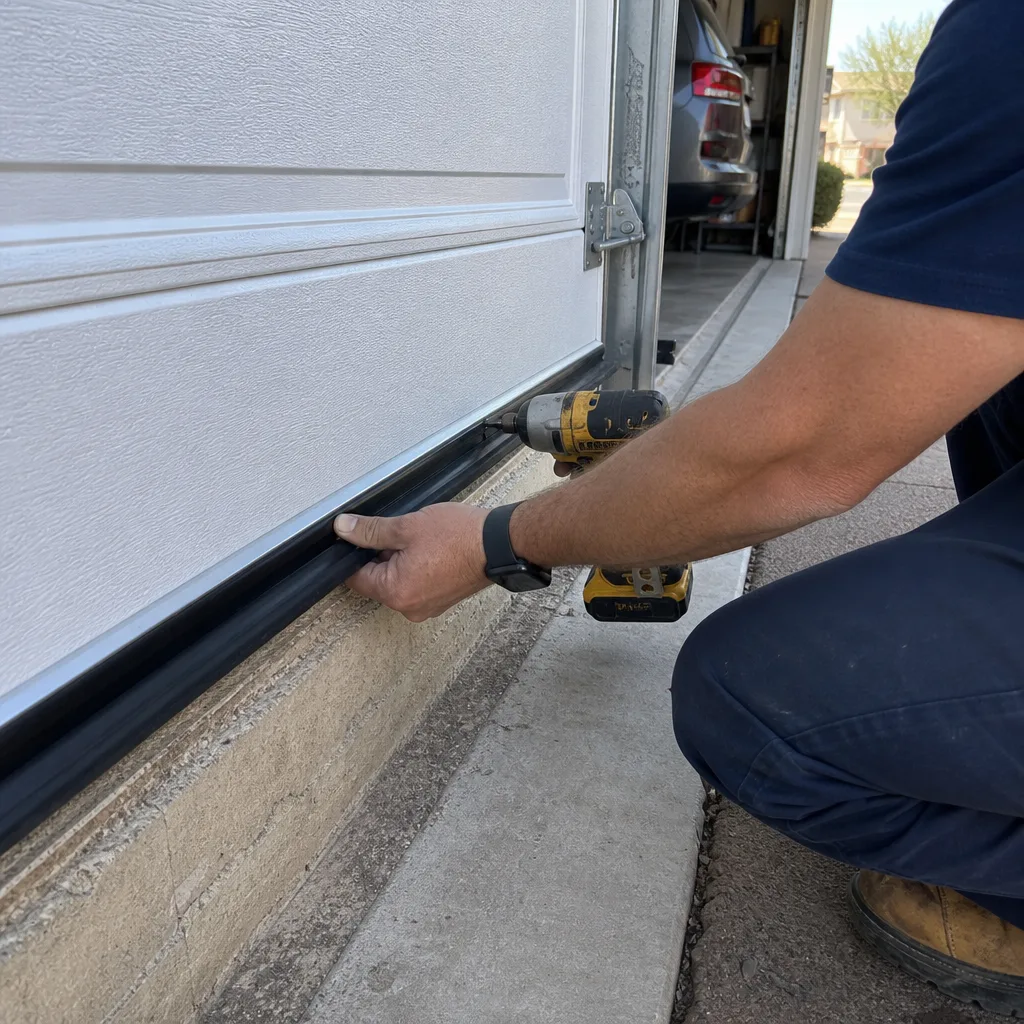
Most of these are specific to the Scottsdale climate or the Maricopa County code environment. They aren’t the generic “forgot to lubricate” items you’ll find on a national blog.
- Buying a 28-gauge polystyrene door for a south-facing wall. The panel will delaminate and fade within 8 years in Scottsdale. Spend slightly more for 24-gauge with a polyurethane core and you add half a decade of life.
- Replacing only one torsion spring when both are the same age. The other one fails within months, and you pay a second service call. Replace springs in pairs, always.
- Skipping the sealed-bearing rollers. Unsealed bearings fill with caliche dust within a single dry season in Scottsdale, and the resulting abrasive paste grinds the bearing race. The sealed bearing is the better spec.
- Assuming a permit is required for a replacement-in-kind. In most Scottsdale residential cases it isn’t, but changing the rough opening or touching the header is structural work that absolutely requires one. Know the trigger before you hire.
- Lubricating with heavy grease. Heavy grease traps caliche dust and makes the exact problem worse. Use a light lithium spray.
- Waiting for the spring to snap before replacing it. In Scottsdale, the spring is going to fail at 7-8 years. Replacing it preemptively is cheaper than the emergency call because you get to schedule the work during normal hours instead of paying for after-hours labor.
When to Call a Professional
If your torsion spring has snapped, your cables have jumped the drum, or your door is stuck mid-travel with tension on one side, call a pro. Torsion spring replacement is genuinely dangerous work; the stored energy in the spring is enough to break an arm. Door off-track situations require re-spooling the cable under tension, which also carries serious risk of injury. For panel replacement, opener logic board work, and full door replacement, a professional’s lift and know-how matter. Servo Garage Doors Scottsdale offers free estimates throughout Scottsdale and the surrounding metro: call (928) 363-3551 and we’ll name a flat, written price before any work begins.
Frequently Asked Questions
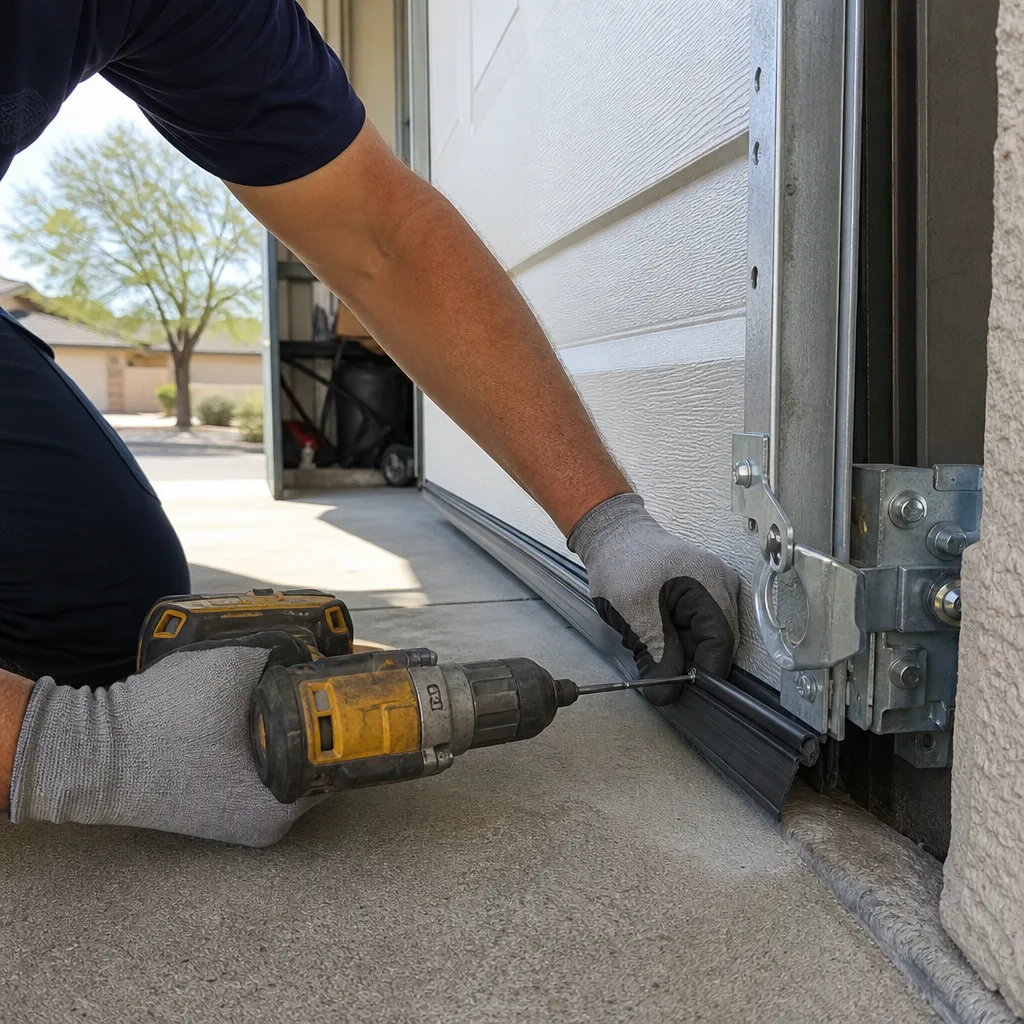
A well-spec’d 24-gauge steel door with a polyurethane core lasts 15-18 years in Scottsdale climate conditions. A 28-gauge polystyrene door on a south-facing wall typically lasts 8-10 years.
The daily thermal swing from 40 degrees overnight to 110 degrees in the afternoon expands and contracts the torsion spring steel, propagating fatigue cracks in the coil faster than national test-lab baselines predict.
Torsion spring replacement in Scottsdale typically runs $200-$400 per spring, depending on cycle rating and door weight. Call (928) 363-3551 for a flat, written price before any work starts.
A replacement-in-kind that doesn’t change the rough opening or touch the structural header does not require a permit in most Scottsdale residential scenarios. Changing the opening size or modifying the header does.
Every 4 months, not the 6-month national interval. The caliche dust load in Scottsdale cements and forms an abrasive paste inside unsealed roller bearings faster than most manuals assume.
Yes, for repair calls we answer live 24/7 and can often have a named technician dispatched the same day. Call (928) 363-3551 and you’ll speak directly to a real person.
The Bottom Line
A Scottsdale garage door is the same product a homeowner in Columbus or Portland buys, but the Sonoran Desert changes the maintenance math on every component. Springs fatigue faster because the steel thermally cycles daily. Panels delaminate faster because the UV index stays above 11 for much of the year. Rollers fail from caliche dust ingress instead of normal bearing wear. Spec the higher-cycle spring, the sealed-bearing roller, the 24-gauge polyurethane-core panel, and a 4-month lubrication interval, and you’ll get the full life out of the door. Servo Garage Doors Scottsdale has served the area since 2015, and we document every finding and every completed repair with a photo record, leaving a written trail instead of a handshake. For Garage Door Installation in Scottsdale or any repair question, call (928) 363-3551.
Written by Marcus Deller, Owner at Servo Garage Doors Scottsdale, serving Scottsdale since 2015. Learn more about the Servo Garage Doors Scottsdale home approach and the written-price-first system we work under.